Link copied
This week's Fed meeting shows just how much the next Fed leader matters.
general :: 2025-12-11 :: source - yahoo finance
By Hamza Shaban
This is The Takeaway from today's Morning Brief, which you can sign up to receive in your inbox every morning along with:
What we're watching
What we're reading
Economic data releases and earnings
With his signature diplomatic touch, Fed Chair Jerome Powell smoothed over Wednesday's dissents, chalking them up to respectful differences of opinion.
But the votes against this week's decision, coming from opposing directions, reflect fundamentally different perspectives in the Fed. And while there was broad agreement that the central bank should lower rates to end the year, the conflicting interpretations of where the US economy is headed will make it hard to find consensus.
Read more: How the Fed rate decision affects your bank accounts, loans, credit cards, and investments
Policy harmony will be even harder to come by when Powell, the purple tie-wearing conciliator, gives up his chair.
The fractured state of Fed policy means the next leader will hold even greater influence. Powell himself acknowledged that the decision to lower rates was "a close call."
"I can make a case for either side," he said.
The reasoning helped to explain that reasonable people can disagree, and that it's not hard for informed observers — whether it's Wall Street analysts or Fed members themselves — to argue either side of the rate-cutting decision.
But that also means the Fed's current majority is a fragile one.
If the economic data doesn't give central bankers the luxury of a clear reading, there's more room for chair influence as the Fed's decision making winds through divided votes.
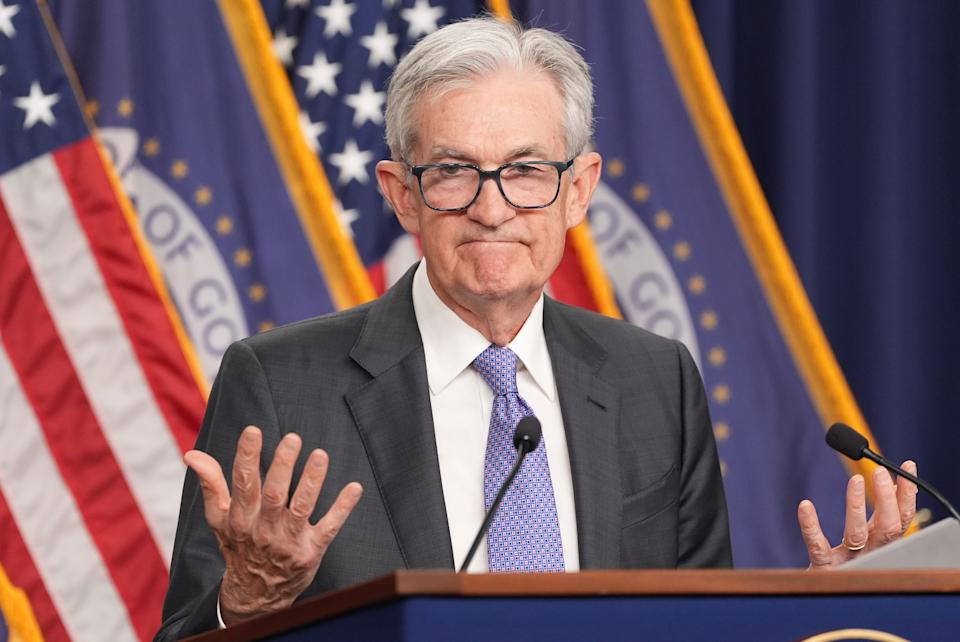 Federal Reserve Chair Jerome Powell speaks at the Federal Reserve,
Wednesday, Dec. 10, 2025, in Washington. (AP Photo/Jacquelyn Martin)
Federal Reserve Chair Jerome Powell speaks at the Federal Reserve,
Wednesday, Dec. 10, 2025, in Washington. (AP Photo/Jacquelyn Martin)
As Bankrate financial analyst Stephen Kates said in a note Wednesday, the range of projected policy rates for next year is unusually wide. Hawkish members, for instance, might push back against another cut next month or beyond. That uncertainty is compounded by the numbered days of Powell's tenure.
"As we enter 2026, the anticipation of new leadership at the Federal Reserve adds yet another layer of uncertainty to the path of monetary policy," said Kates.
Powell's term as leader ends in May, with three policy meetings to go before then. But President Trump could name his Fed chair nominee before Christmas, according to recent comments from Treasury Secretary Scott Bessent.
Powell was asked whether the president's public discussion of his successor interferes with his job at the Fed.
Powell answered with a swift "no," of course.
But the credibility — and independence — of the next chair will be key not only for bond markets, but also for other voting members who will have to be persuaded and corralled to build some form of consensus.
Which, if the majority grows thin amid tension between the Fed's two mandates, could make all the difference.
Hamza Shaban is a reporter for Yahoo Finance covering markets and the economy. Follow Hamza on X @hshaban.
This week top market trends.
-
Shares end tough November on firmer ground helped by Fed cut bets
2025-11-28 :: stock :: reuters -
Bitcoin Heading for Worst Month Since Crypto Collapse of 2022
2025-11-21 :: crypto :: bloomberg -
Employers likely added 40,000 jobs in November as government releases report delayed by shutdown
2025-12-16 :: general :: apnews -
OpenAI goes from stock market savior to burden as AI risks mount
2025-12-08 :: companies :: bloomberg -
Gold Gets Choppy as CME Outage Gives Traders Another Headache
2025-11-28 :: commodities :: bloomberg
Recent global market news
-

Bitcoin and XRP Struggle Again. Why Coinbase, Robinhood, and Strategy Stocks Are Rising.
2025-12-18 :: :: barrons -

Stifel Reiterates Buy on Accenture (ACN) Ahead of December 18 Earnings.
2025-12-17 :: :: insider monkey -

Employers likely added 40,000 jobs in November as government releases report delayed by shutdown
2025-12-16 :: :: apnews