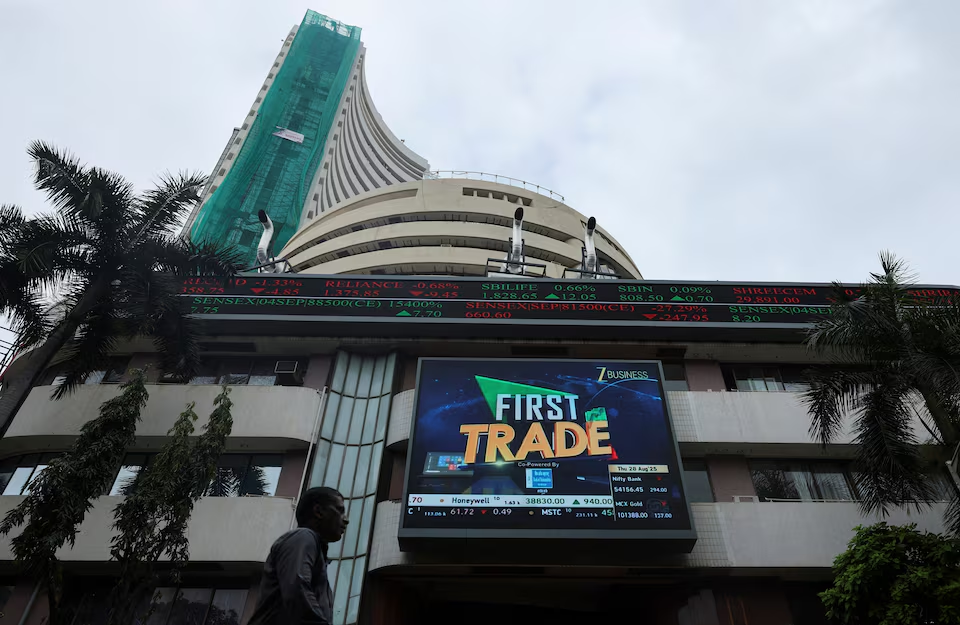
However, Wall Street losses have been relatively mild, with the S&P 500 (.SPX) down less than 1% this week after paring early losses into the close on both trading days.
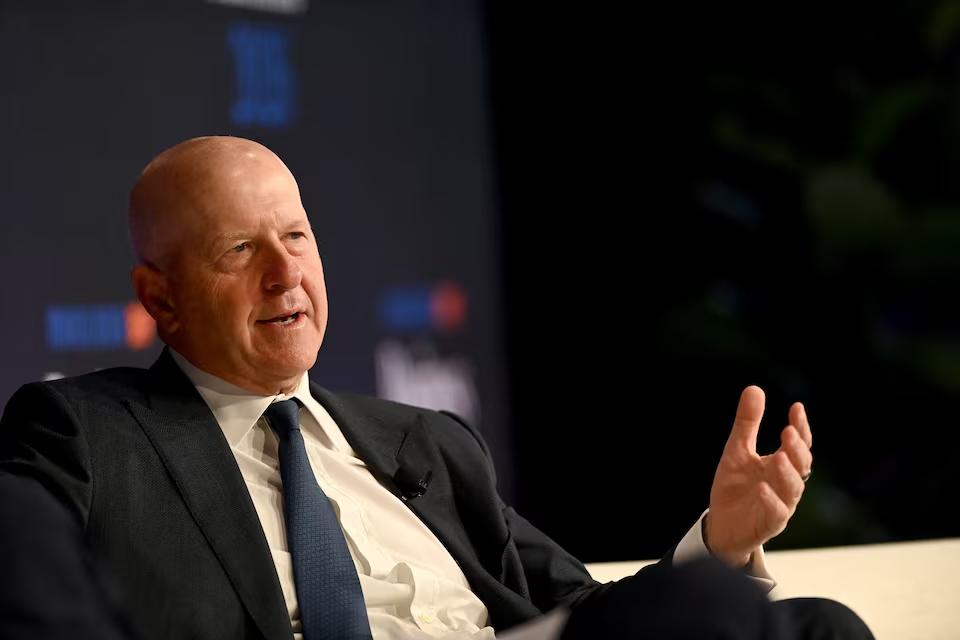
Solomon said a combination of factors, including an easing monetary cycle and a significant relaxation of regulatory practices, had helped keep the U.S. economy in solid shape.
"Let us put aside what's going on in the Middle East at the moment," he said. "We have a confluence of strong macro tailwinds that make the economic growth trajectory of the United States, I think, quite compelling."
"There is definitely a reasonable probability this year that the U.S. economy runs a little bit hot. And with that, is it possible that inflation can wind up being slightly higher than the consensus expectation? Yes."
The economy's resilience also meant private credit portfolios in the U.S. have "generally been pretty good." But a slowdown in growth during a long credit cycle could lead to weakened lending standards.
"Lending standards come down because there's a competition to deploy capital," he said. "I'm a little concerned about that ... when we do have a slowdown, if we do have a recession, you'll have more visibility on some of those places where lending standards have weakened."
AI IMPACT ON BANK HEADCOUNT 'COMPLICATED'
Solomon also said artificial intelligence would disrupt the labour market in the short term, in particular with white-collar jobs, but would not lead to a long-term "labour gap."
In February, Goldman signed a deal with AI company Anthropic to develop AI-powered agents to automate processes including client onboarding.
The immediate effects on the bank’s employees would be "complicated," he said.
"I'm not going to sit here and speculate and say the headcount numbers are going to look exactly like this, because we don't put that out publicly," he said. "But what we're trying to do is create more capacity to move people to different places."
"The headcount won't necessarily be that different. It'll just be more productive."
Reporting by Christine Chen in Sydney; Writing by Renju Jose; Editing by Christian Schmollinger, Kevin Buckland and Thomas Derpinghaus
This week on Reuters