Link copied
Social Security benefit cuts are coming and they will hit current retirees hard.
personal finance :: 8hrs ago :: source - marketwatch
By Brenton Smith
As 2026 gets under way, it marks yet another year of congressional inaction on the financial uncertainty of Social Security. Now, 43 years have passed since lawmakers last mustered the courage to talk about the gap between what the program promises and what it expects to pay.
Through the years, this sentiment on the Hill has metastasized into institutional indifference, and the men and women of Capitol Hill do little more than posture about protecting Social Security on terms far removed from reality.
Most Read from MarketWatch
Dow falls nearly 800 points after Powell makes one thing clear: There’s no rush to rescue the market
Warren Buffett’s parting gift to Berkshire Hathaway: a $2 billion Iran oil windfall
This environment has preserved Washington’s best-kept secret: Benefit cuts are coming to Social Security, and they will hit existing retirees hard.
Social Security’s trust fund supporting seniors is expected to run short of money in a few short years, resulting in benefit cuts of 22.5% in 2033, according to the Trustees report released in June. New projections from the Congressional Budget Office advance that to 2032. There’s little doubt that the numbers will once again worsen when the Trustees’ projections are refreshed in a few months.
Our lawmakers will surely respond to those numbers with the rhetoric of empty politics. Those on the left will vaguely talk about taxing the billionaire behind the tree, while those on the right will suggest that we can fix Social Security by calling a “benefit cut” an “adjustment” as though the public won’t notice their rapidly shrinking checks.
These policy sound bites are the economic equivalent of Linus promising that the Great Pumpkin will appear to save Social Security.
In response to this legislative dysfunction, we, the voters, have decried what our kick-the-can politics might do to our grandchildren. What appears to have eluded voters is that the can has not budged in more than a decade. So forget the grandchildren, we are the people over whom so many hands have been wrung over the last 40 years.
Even as the finances deteriorated, voters have responded with systemic denial.
“Oh, Congress would never let that happen,” seniors claim. “Voters would run every politician out of town with pitchforks and blowtorches.”
But Congress reduced benefits in 1977 and 1983, and politicians were re-elected in historic numbers.
Read: A 20% Social Security cut looms. Here’s how warning Americans could make it even worse.
Instead of voting responsibly, seniors recycle the tired cliche of indifference, “We paid for our benefits.” Yes, those collecting did pay a portion of their future benefits, but nothing close to the full cost. This is why the gap between what the program expects to collect and what it has promised has roughly doubled over the past decade. Someone hasn’t paid the full cost of their benefit checks.
In contrast to this nostalgic narrative, the actual terms of Social Security haven’t changed since 1960. In the Flemming v. Nestor decision, the Supreme Court ruled that workers don’t have a legal right to Social Security payments and Congress can change the rules regarding eligibility. Voters pay taxes today to pay for current retirees and maybe a future generation will do the same for these workers when they retire.
Under these terms, the government has warned those currently collecting benefits that checks would be reduced starting in the mid-2030s for more than 30 years unless Congress takes action. Voters can’t really be shocked that the government was telling the truth for once. Nor can current beneficiaries be surprised that future retirees do not wish to absorb all of the pain caused by Congressional inaction.
In a better world, Congress would have increased the payroll tax rate in 1994 in response to the system’s decline. That debate would have triggered a discussion about the cost of runaway benefits, which would have reined in the size of benefit checks long ago.
Instead, we ignored the problem, and that procrastination was costly. Back in 2005, a 2% increase in the payroll tax would have extended the program’s solvency through 75 years. By 2015, the cost to achieve the same result would have cost 3% more in payroll taxes. Today, it is 4%.
In order for the current retirees to be exempt from the cleanup of Social Security, younger workers would face the prospect of paying the equivalent of 4% more in payroll taxes because voters over the last 40 years have been unwilling to pay a penny more in taxes.
If fixing Social Security were easy, it would already be done. Benefit cuts are coming, and boomers can’t seriously expect to sidestep the consequences of a crisis created by the way they have voted for 40 years. The bailout is not going to happen.
Read more MarketWatch Social Security coverage
Brenton Smith was a policy adviser on Social Security with work appearing in Forbes, Barron’s, MarketWatch, The Hill, and more.
Most Read from MarketWatch
This week top market trends.
-
'Money's moving out of tech': Wall Street weighs stock market winners amid the AI scare trade
2026-02-23 :: stock :: yahoo finance -
DoorDash shares jump as delivery demand fuels growth forecast
2026-02-20 :: companies :: reuters -
HP (NYSE:HPQ) Exceeds Q4 CY2025 Expectations But Stock Drops
2026-02-25 :: companies :: stockStory

Recent global market news
-

Where Should You Put $10,000 Today? Look at These 3 Sectors That Are Winning While Tech Slumps.
2026-03-05 :: :: barchart -
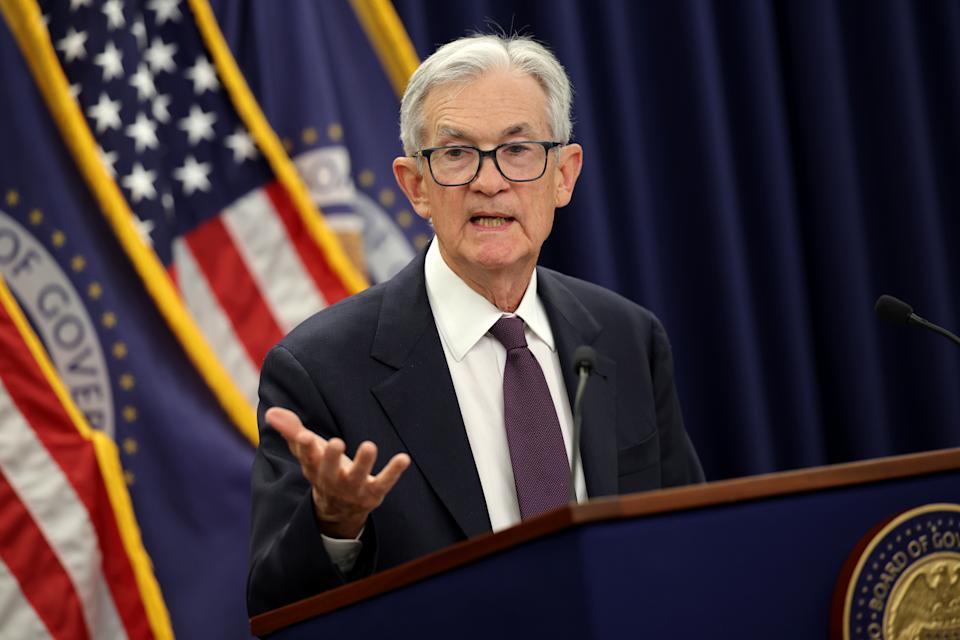
Oil price spike likely to keep rates on hold but deepen divisions among Fed officials this week
2026-03-16 :: :: yahoo finance