Link copied
The Nasdaq Is Officially in a Correction. Here's What Investors Should Do, According to History.
trade ideas :: 8hrs ago :: source - motley fool
By Anthony Di Pizio
The Nasdaq-100 index tracks the performance of the top 100 companies (by value) listed on the Nasdaq stock exchange, excluding banks and other financial institutions. A whopping 60% of the index's portfolio is parked in the technology sector alone, so it has a high degree of exposure to rapidly growing artificial intelligence (AI) companies like Nvidia.
As a result, the Nasdaq-100 often outperforms more diversified indexes like the S&P 500, but it also experiences more volatility during periods of market turmoil. The index is currently in correction territory after declining by more than 10% from its record high, as investors digest spiking oil prices caused by the ongoing geopolitical tensions in the Middle East.
Will AI create the world's first trillionaire? Our team just released a report on the one little-known company, called an "Indispensable Monopoly" providing the critical technology Nvidia and Intel both need. Continue »
Investors can track the performance of the Nasdaq-100 by purchasing an exchange-traded fund (ETF) like the Invesco QQQ Trust (NASDAQ: QQQ), which holds the same stocks and maintains similar weightings. History suggests now might be a great time to swoop in and buy. Here's why.
 Image source: Getty Images.
The Middle East conflict is making a tough situation even worse
Over the long term, stock prices are driven by corporate earnings. If investors think companies will be making less money in the future, they might trim their exposure to the stock market today. Oil is a key input cost for every product that requires transportation by air, land, or sea, leaving consumers with higher prices not just at the gas pump, but also at the grocery store and at their favorite retailers.
Nvidia is the largest holding in the Nasdaq-100, with a weighting of 8.5%. It sells the world's best graphics processing units (GPUs) for data centers, which are the primary chips used in AI development. Most of its customers are corporate giants like Microsoft and Amazon, so you might think its sales are less exposed to spiking oil prices. But those companies draw a huge chunk of their revenue from consumers, so if they make less money, they are likely to buy fewer chips.
Therefore, the knock-on effects from the conflict in the Middle East threaten to impact almost every company in the Nasdaq-100.
This economic shock arrived at a very unfortunate moment. According to the Bureau of Labor Statistics' latest non-farm payrolls report, the U.S. economy lost a whopping 92,000 jobs in February. Further, Federal Reserve Chair Jerome Powell thinks the private sector has created zero jobs over the last six months, after adjusting for overcounting and poor data collection methods. Adding a potential spike in inflation due to rising oil prices could make this situation significantly worse in the coming months, casting uncertainty over corporate earnings.
Tech stocks were already on shaky ground
Before the Middle East conflict started, tech investors were already digesting a potential slowdown in AI data center infrastructure spending from some companies. OpenAI, which created ChatGPT, lowered its capital expenditures (capex) outlook from $1.4 trillion to $600 billion through 2030, casting doubt over its ability to purchase as much computing capacity from cloud providers as it originally planned.
Microsoft has a $625 billion order backlog from customers who are waiting for more data centers to come online to power their AI development goals, and 45% (or $281 billion) is attributable to OpenAI alone. Similarly, reports suggest OpenAI has a whopping $300 billion deal with Oracle to buy computing capacity. These hefty numbers are now questionable.
In my opinion, even OpenAI's revised capex forecast of $600 billion over the next four years might be ambitious. The company only has $25 billion in annualized revenue right now, and it's losing a ton of money at the bottom line. It just raised $120 billion from investors, but that still doesn't come close to fulfilling its capex needs.
Here's what investors should do during the Nasdaq correction
With all of the headwinds I've detailed above, it's no surprise the Nasdaq-100 has plunged by over 10%. The question is whether a correction of this magnitude is representative enough of the risks ahead, but it's almost impossible to answer that today. If oil prices continue to climb, for example, further downside in the stock market is likely.
However, volatility is a normal part of the investing journey. The Nasdaq-100 has experienced five bear markets (declines of 20% or more) over the last 26 years alone, triggered by events like the bursting of the dot-com bubble in 2000, the global financial crisis in 2008, the COVID-19 pandemic in 2020, the inflation crisis in 2022, and the Trump administration's "Liberation Day" tariffs in 2025.
While it's impossible to predict exactly what the Nasdaq-100 will do in the short term, it has always climbed to new highs over the long run, so investors who bought dips have yielded very strong returns. In fact, the Invesco QQQ ETF has delivered a compound annual return of 10.3% since it was established in 1999, even after accounting for every sell-off, correction, and bear market along the way.
Although the AI boom appears to be hitting turbulence, Nvidia CEO Jensen Huang thinks data center operators could spend up to $4 trillion per year on infrastructure by 2030 to meet astronomical demand for computing capacity from AI developers. Perhaps OpenAI won't be one of the long-term winners as many people thought, but there are enough companies competing for AI supremacy that overall spending probably won't suffer a sharp slowdown.
As a result, this sell-off could be a great opportunity for investors to buy some exposure to the Nasdaq-100 through the Invesco QQQ ETF, as long as they maintain a long-term outlook of five years or more.
Should you buy stock in Invesco QQQ Trust right now?
Before you buy stock in Invesco QQQ Trust, consider this:
The Motley Fool Stock Advisor analyst team just identified what they believe are the 10 best stocks for investors to buy now… and Invesco QQQ Trust wasn’t one of them. The 10 stocks that made the cut could produce monster returns in the coming years.
Consider when Netflix made this list on December 17, 2004... if you invested $1,000 at the time of our recommendation, you’d have $503,861!* Or when Nvidia made this list on April 15, 2005... if you invested $1,000 at the time of our recommendation, you’d have $1,026,987!*
Now, it’s worth noting Stock Advisor’s total average return is 884% — a market-crushing outperformance compared to 179% for the S&P 500. Don't miss the latest top 10 list, available with Stock Advisor, and join an investing community built by individual investors for individual investors.
*Stock Advisor returns as of March 31, 2026.
Anthony Di Pizio has no position in any of the stocks mentioned. The Motley Fool has positions in and recommends Amazon, Microsoft, Nvidia, and Oracle. The Motley Fool recommends Nasdaq. The Motley Fool has a disclosure policy.
This article was originally published by The Motley Fool
This week top market trends.
-
World shares are mixed following Wall Street’s losses, as oil continues to climb
2026-03-06 :: stock :: apnews -
Three Ships Hit by Projectiles in Middle East, UK Navy Says
2026-03-11 :: general :: bloomberg -
European shares fall as Mideast tensions keep investors on edge
2026-03-11 :: stock :: reuters
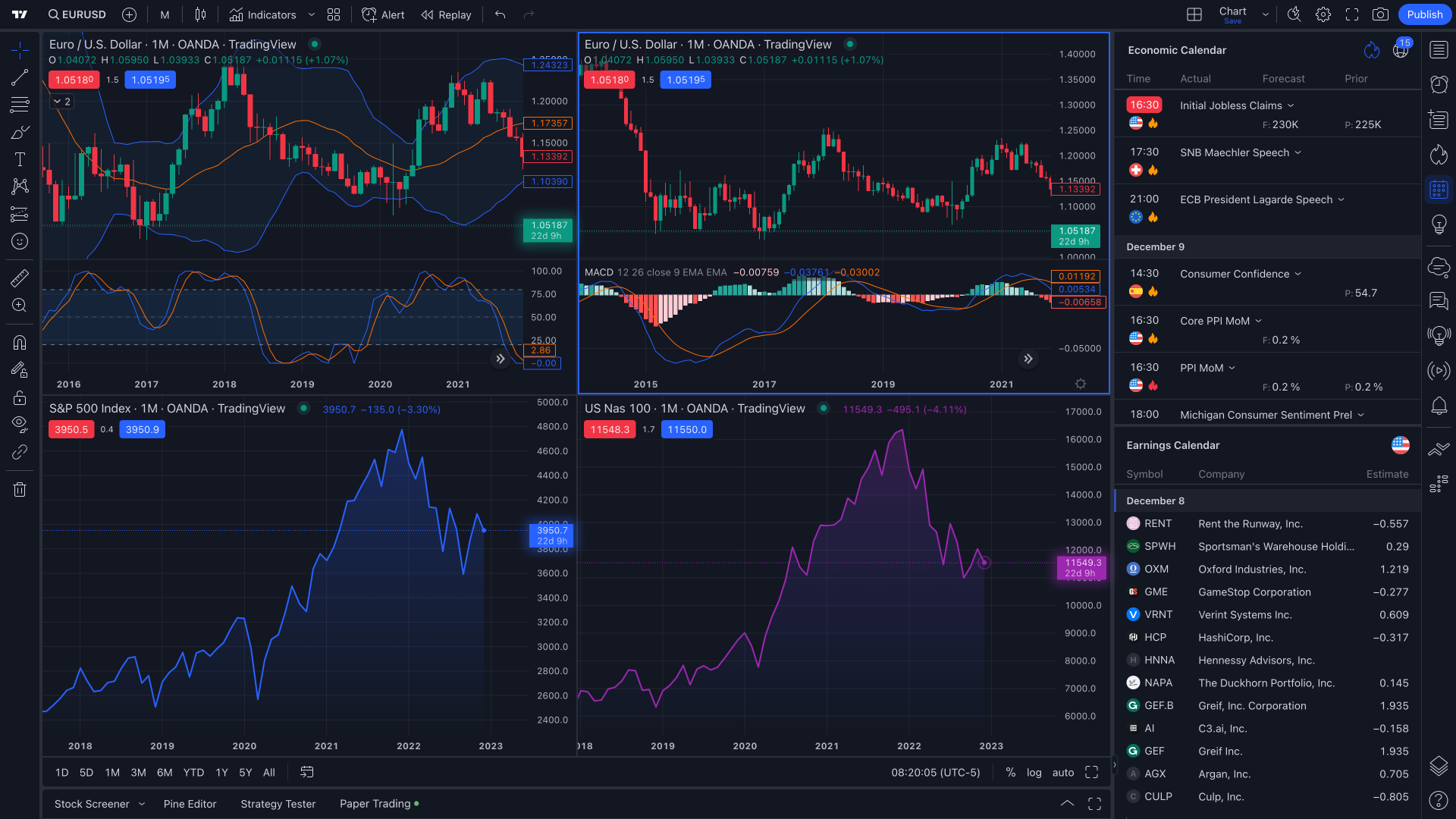
Recent global market news
-
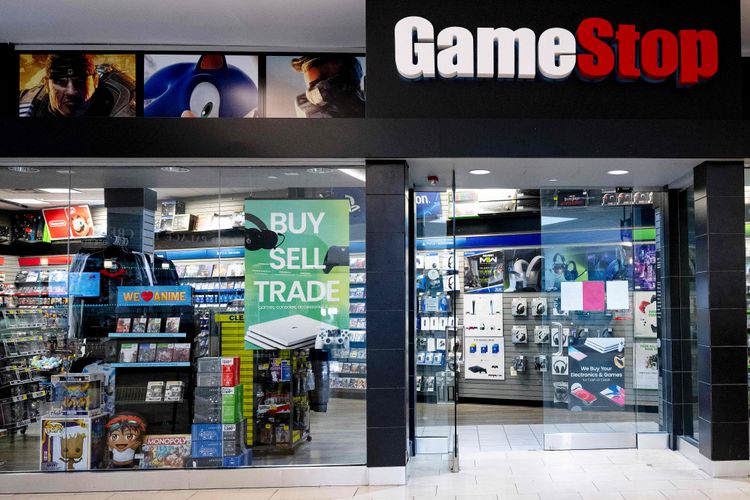
What to Expect in Markets This Week: GameStop Earnings, Consumer Sentiment, Import Price Index, Jobless Claims
2026-03-23 :: :: investopedia