Link copied
Billionaire Investor Bill Ackman Is Opening His Hedge Fund to Retail Investors. Here's What Investors Need to Know About This Complex IPO.
stock :: 4hrs ago :: source - motley fool
By Bram Berkowitz
Billionaire investor Bill Ackman has built quite a reputation as an investor. He once focused primarily on activist short-selling, a period during which he waged an epic battle with another investing titan, Carl Icahn, over the company Herbalife.
Ackman currently runs a concentrated hedge fund, Pershing Square Capital Management, which typically holds 10 to 12 long positions at any given time.
Will AI create the world's first trillionaire? Our team just released a report on the one little-known company, called an "Indispensable Monopoly" providing the critical technology Nvidia and Intel both need. Continue »
Ackman and his team will occasionally engage with management teams, but in the form of "long-term constructive engagement." The fund has performed well, with a 10-year return of 380% net of fees as of March 31.
Now, Ackman is ready to open his hedge fund to U.S. retail investors. Here's what investors need to know about this complex initial public offering (IPO).
 Image source: Getty Images.
The complex nature of the IPO
The corporate structure of Ackman's fund can be difficult to understand. Ackman and his team, who actually manage the fund, operate under Pershing Square Capital Management, which had net assets of over $15.5 billion at the end of 2025.
Then there is Pershing Square Holdings (OTC: PSHZF), a European closed-end fund that essentially gives retail and institutional investors access to Pershing Square Capital Management's investments. Closed-end funds issue a fixed number of shares. The shares cannot be redeemed like an open-end mutual fund but trade on a secondary market, as a stock would.
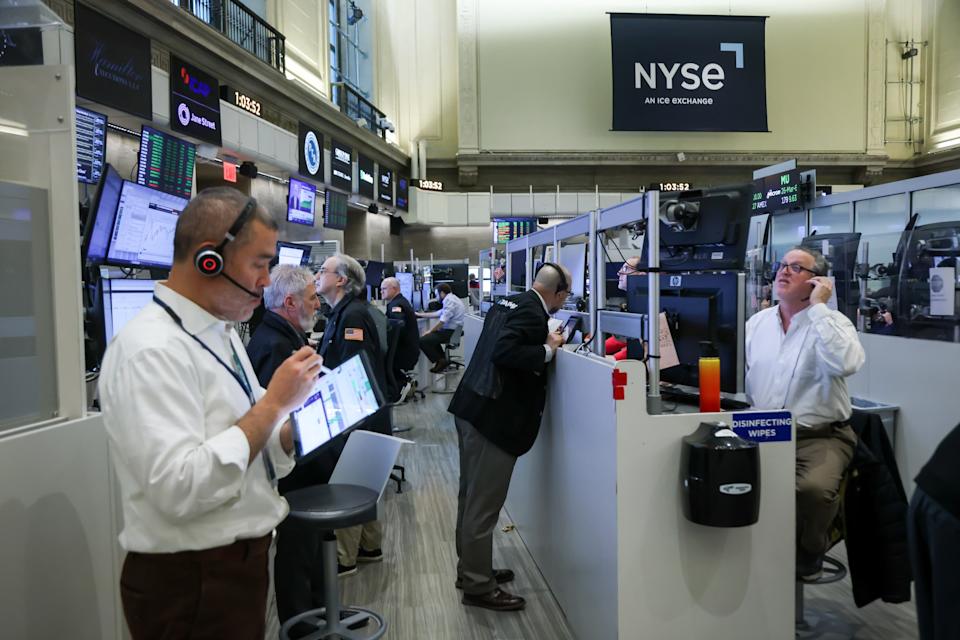
Later this month, Ackman will conduct an IPO for Pershing Square USA under the ticker PSUS, which will trade on the New York Stock Exchange.
Similar to Pershing Square Holdings, Pershing Square USA will be a closed-end fund, meaning if you invest in PSUS, you are betting on Ackman and his team's investing prowess and their ability to generate market-beating returns from their stock portfolio. Ackman is seeking to raise at least $5 billion in the IPO and as much as $10 billion, and has already lined up a private placement of $2.8 billion.
As a sweetener, and likely because closed-end funds typically trade at a discount to their net asset value (NAV), investors of PSUS will also receive free shares in Pershing Square Inc. under the ticker PS, a separate company that Ackman is taking public in tandem with PSUS.
PS is the management company of PSUS. Investors in PS are effectively buying the business of managing the closed-end fund. The success of PS depends on how much capital Pershing Square USA can raise and, therefore, how much in fees it can collect annually.
For every five PSUS shares purchased, investors will receive one PS share, and Ackman is not planning to issue additional PS shares to anyone other than investors who purchase PSUS.
Pros and cons of buying the IPO
Retail investors will have the opportunity to participate in the IPO, with PSUS shares expected to be priced at $50 per share. There are pros and cons for retail investors.
The advantage is that retail investors can gain access to a prominent hedge fund at a cheaper cost than what is typically charged. When you are an institutional investor in a hedge fund, you typically agree to a 2% annual management fee based on assets under management (AUM) plus 20% of a fund's annual profits above a certain threshold.
In PSUS, there will be no performance fees, so investors will only pay a 2% annual management fee, which is certainly toward the higher end of what most closed-end funds charge.
The big pros are that you get to invest alongside Ackman and his team, which conducts extremely thorough bottoms-up analysis before picking stocks. This process gives Ackman and his team high conviction in their picks.
Furthermore, because there are no redemptions, Pershing will essentially raise permanent capital that Ackman and his team can invest long term. Most hedge funds invest over a 12- to 18-month period.
Here are the stocks owned by Pershing Square Capital Management at the end of 2025 and their weight in the fund:
Brookfield Corp -- 18%
Uber Technologies -- 16%
Amazon -- 14%
Alphabet (class C) -- 13%
Meta Platforms -- 11%
Restaurant Brands International -- 10%
Howard Hughes Holdings -- 9.7%
Hilton Worldwide Holdings -- 5.6%
Alphabet (class A) -- 1.4%
Seaport Entertainment Group -- 0.6%
Hertz Global Holdings -- 0.5%
The cons are that, like many other closed-end funds, PSUS will likely trade at a discount to its NAV, potentially over 10%, according to Eric Boughton, a portfolio manager at Matisse Capital, as reported by Barron's.
Boughton believes the lack of redemptions and the high relative management fee will lead to the discount, although the PSUS discount to NAV is likely to be much smaller than that of Pershing Square Holdings, which charges high performance fees and trades at a discount of over 23% to NAV, as of this writing.
These are all things for investors to keep in mind as they consider whether or not to invest.
Should you buy stock in Pershing Square right now?
Before you buy stock in Pershing Square, consider this:
The Motley Fool Stock Advisor analyst team just identified what they believe are the 10 best stocks for investors to buy now… and Pershing Square wasn’t one of them. The 10 stocks that made the cut could produce monster returns in the coming years.
Consider when Netflix made this list on December 17, 2004... if you invested $1,000 at the time of our recommendation, you’d have $580,872!* Or when Nvidia made this list on April 15, 2005... if you invested $1,000 at the time of our recommendation, you’d have $1,219,180!*
Now, it’s worth noting Stock Advisor’s total average return is 1,016% — a market-crushing outperformance compared to 197% for the S&P 500. Don't miss the latest top 10 list, available with Stock Advisor, and join an investing community built by individual investors for individual investors.
*Stock Advisor returns as of April 17, 2026.
Bram Berkowitz has no position in any of the stocks mentioned. The Motley Fool has positions in and recommends Alphabet, Amazon, Brookfield, Brookfield Corporation, Howard Hughes, Meta Platforms, Seaport Entertainment Group, and Uber Technologies. The Motley Fool recommends Restaurant Brands International. The Motley Fool has a disclosure policy.
This article was originally published by The Motley Fool
This week top market trends.
-
Gold ticks higher as dollar eases, Iran deal hopes temper oil, inflation concerns
2026-04-06 :: commodities :: reuters -
Bonds Lose $2.5 Trillion in Iran War Wipeout That Mirrors 2022
2026-03-23 :: treasuries & bonds :: bloomberg -
Iran’s Attacks on Mideast Aluminum Plants Threaten Supply Crisis
2026-03-30 :: general :: bloomberg
Recent global market news
-
Coinbase plans expansion to stock trading in Australia after securing license
2026-04-08 :: :: cointelegraph