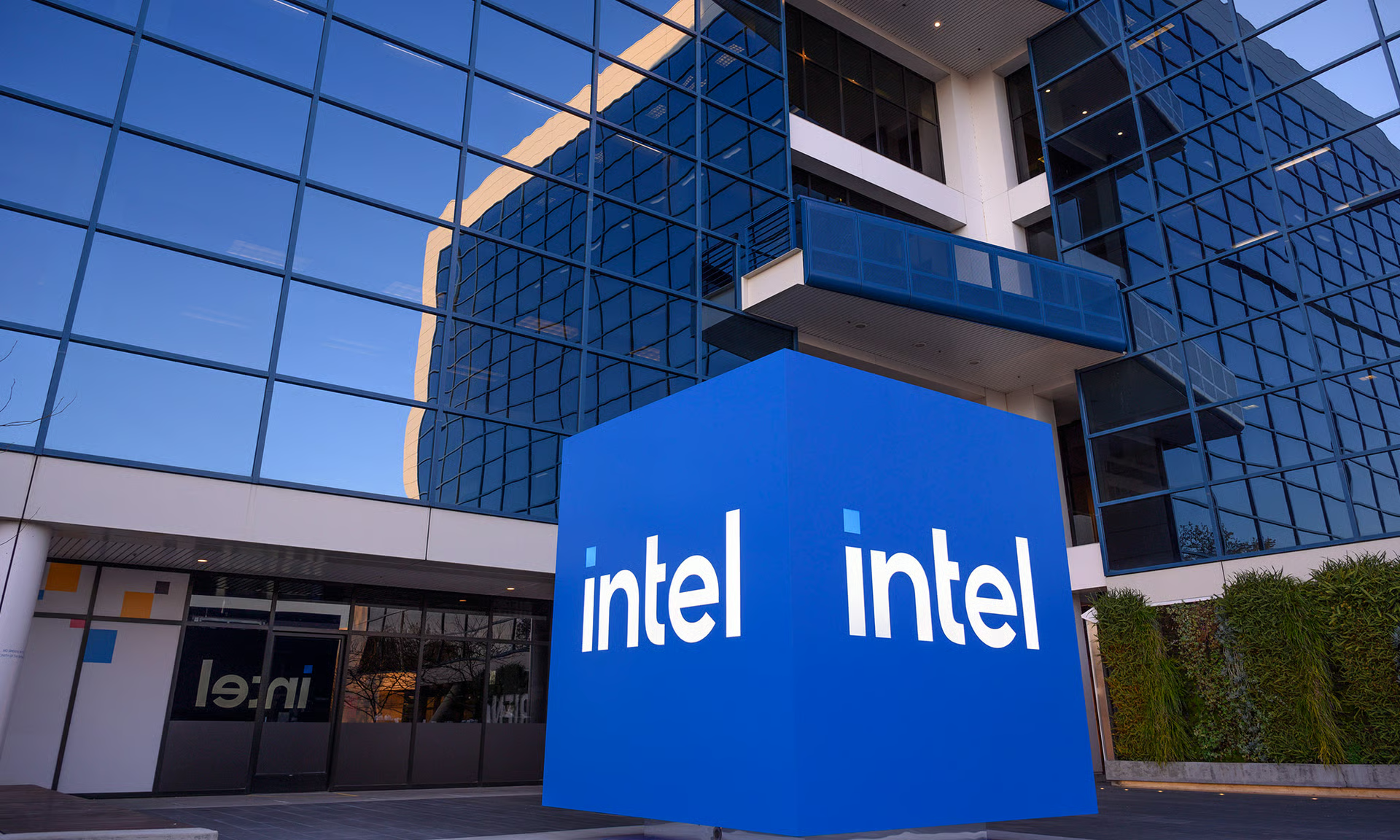
 Image source: Intel.
While GPUs take on the bulk of the work when it comes to inference -- the process of using models on new data to reach a conclusion or answer a question -- autonomous AI agents must retrieve a lot of data from different sources and tap into different areas to conduct tasks. CPUs provide the right sort of capabilities to orchestrate those tasks, whether they involve conducting a web search or evaluating a task an AI agent is about to complete.
On Intel's first-quarter earnings call, CEO Lip-Bu Tan explained just how critical CPUs have become in the AI ecosystem:
For the last few years, the story around high-performance computing has been almost exclusively about GPUs and other accelerators. In recent months, we have seen clear signs that the CPU is reinserting itself as the indispensable foundation of the AI era. The CPU now serves as the orchestration layer and critical control plane for the entire AI stack. This is not just our wishful thinking; it is what we hear from our customers, and it is evident in the demand profile for our products.
Intel expects CPU demand to continue accelerating. When it comes to inference, Tan said that customers view CPUs as more efficient for orchestration, the control plane, and the management of different AI agents. The ratio of GPUs to CPUs used to be 8-to-1 for these tasks; now it's 4-to-1. Tan thinks it could move toward parity or better over time.
Intel's advantages in CPUs
Rising demand for CPUs isn't the only good news for Intel. This is also an area where Intel has excelled for decades, thereby offering several advantages. For one, Intel doesn't just design CPU architectures; it also manufactures its CPUs, and even the silicon wafers that it uses to make them. Essentially, it controls the entire CPU production process.
The company recently acquired the remaining 49% stake it didn't previously own in one of the factories in Ireland where it makes CPUs, boosting investor confidence in its balance sheet.
As a leader in the CPU space, the company will retain significant value as long as demand for those chips remains strong in the AI ecosystem. It's also a different way to get exposure to AI than buying shares of companies that make GPUs or build data centers, so Tan's news about the degree to which CPUs are becoming a more critical piece of the tech stack in the nascent agentic AI era really is phenomenal news for Intel investors.