Markets remained cautious at the start of the trading week after U.S. President Donald Trump said they would start an effort on Monday morning to free ships stranded in the Strait of Hormuz as a "humanitarian gesture" to aid neutral countries in the U.S.-Israeli war with Iran.
Iran warned the U.S. Navy not to enter the Strait of Hormuz, saying it would "respond harshly" to any threat.
The U.S. dollar index , which measures the greenback's strength against a basket of six currencies, was up 0.1% at 98.264.
The euro was little changed at $1.1717 after German Chancellor Friedrich Merz sought to downplay a rift with Trump after the U.S. announced plans to draw down troops from Germany.
The country's economy ministry said on Sunday that Berlin is also in touch with the European Commission as it holds talks with Washington, after Trump said on Friday he would increase tariffs on cars and trucks from the EU to 25%.
"In the grand scheme of things, it (auto tariffs) is definitely not a positive, but it's not going to be the main driver," SEB's Sundström said.
"The situation in the Middle East is definitely the dominant factor now."
The British pound was down 0.1% at $1.3564. British markets are closed on Monday for a public holiday.
The Australian dollar was down 0.2% at $0.7192, while its kiwi counterpart advanced 0.1% at $0.59.
The Reserve Bank of Australia is due to announce its next policy decision on Tuesday, with the majority of analysts polled by Reuters expecting a hike in the cash rate to 4.35%. Last week, Australia's top two grocers warned of growing price pressures as the Iran war drives up fuel and raw material costs for suppliers.
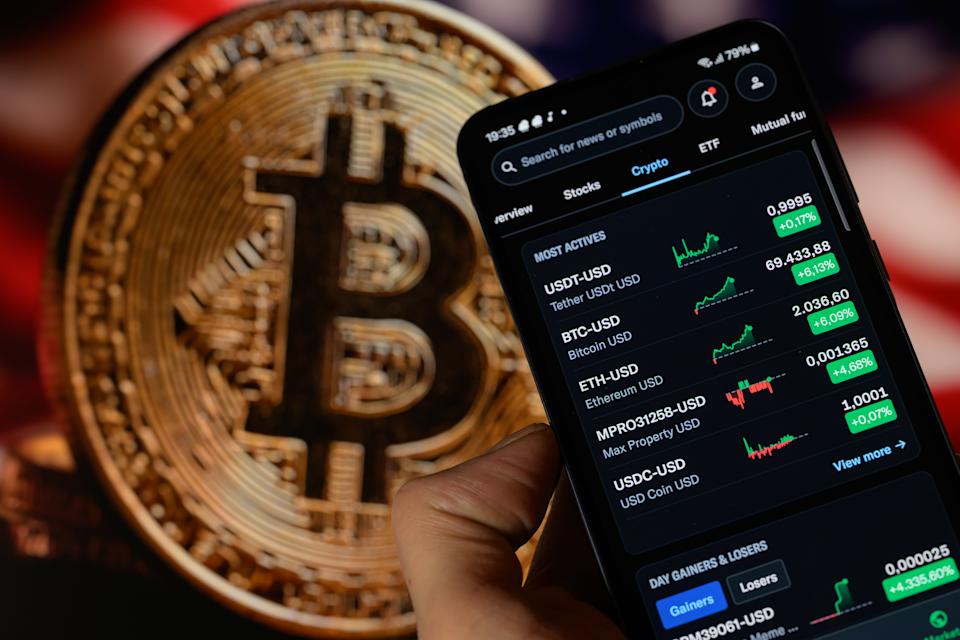
Bitcoin was up 1.1% at $79,744, after earlier trading above $80,000 for the first time since January 31.
Reporting by Samuel Indyk and Gregor Stuart Hunter; Editing by Muralikumar Anantharaman and Toby Chopra
This week on Reuters