Link copied
Why the Crypto Market Is Down in June 2026 -- And What Smart Investors Are Doing About It.
crypto :: 11hrs ago :: source - investorshd
By Ijlal Ahmed | InvestorsHD
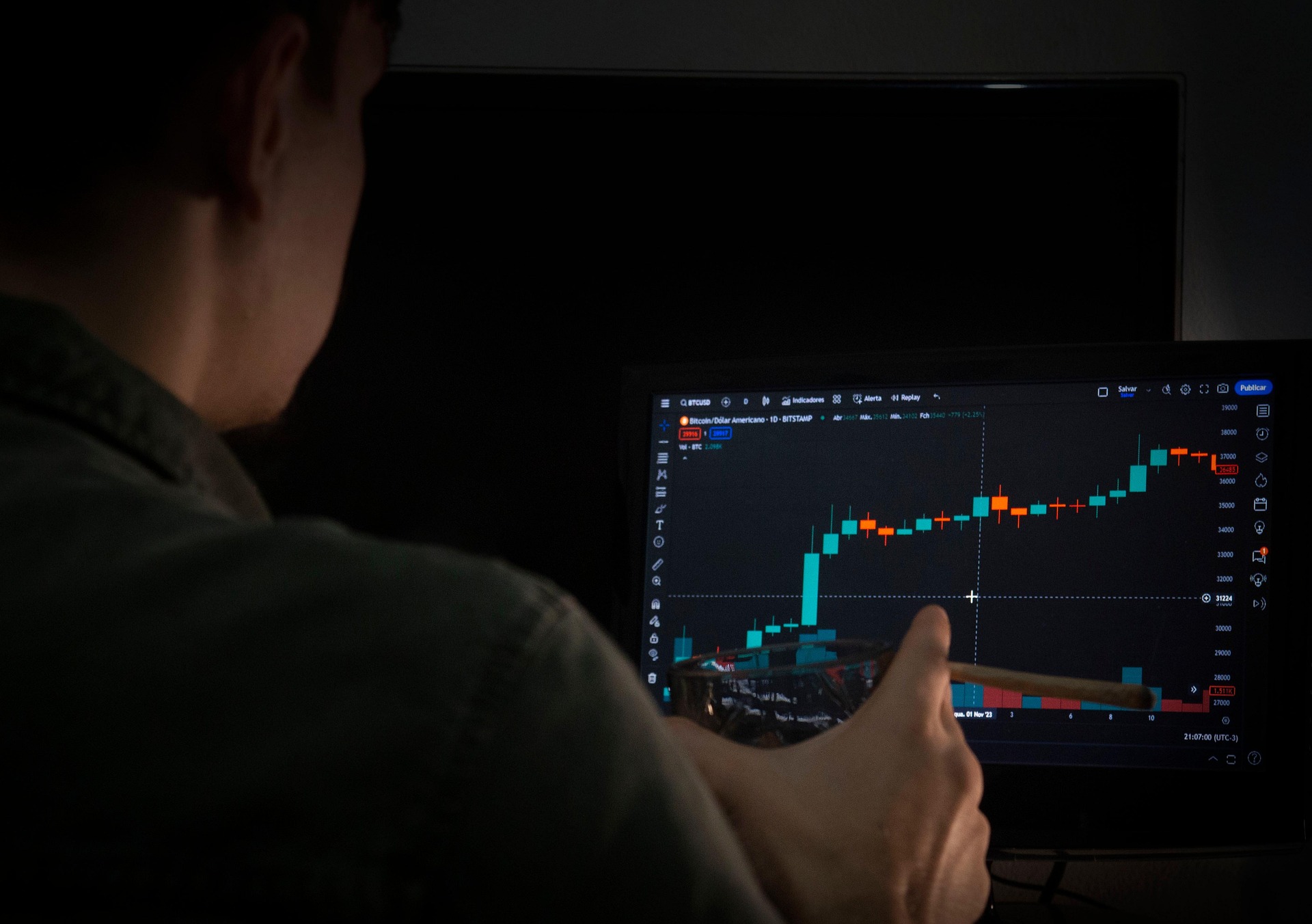 Why the Crypto Market Is Down in June 2026 — And What Smart Investors Are Doing About It. Image by PriismaDesign / Pixabay
If you have opened your crypto portfolio in June 2026 and felt your stomach drop, you are not alone. Bitcoin is trading around $62,000–$68,000 — more than 50% below its all-time high of nearly $137,000 reached in late 2025. Ethereum, Solana, XRP, and virtually every major altcoin are deep in the red. Spot Bitcoin ETFs have recorded their longest streak of daily outflows ever, with cumulative redemptions exceeding $1.75 billion since mid-May. The mood in crypto markets right now is grim. But here is what the headlines are not telling you: this selloff is not random. It has specific, identifiable causes — and understanding those causes is the difference between panic selling at the bottom and positioning intelligently for what comes next.
What Is Actually Driving the June 2026 Crypto Crash
The current selloff has four distinct drivers working simultaneously — and none of them are permanent.
1. Stubborn Inflation and Fed Hawkishness:
Inflation refused to cooperate through May 2026. With new Fed Chair Kevin Warsh — who officially took over from Jerome Powell on May 22 — maintaining a hawkish posture heading into the June 16–17 FOMC meeting, crypto assets faced the kind of macro pressure that hits risk-sensitive instruments hardest. Markets are pricing in a 97% probability of no rate cut at the June meeting, and the dot plot Warsh is expected to release will be closely scrutinized for signals about the second half of 2026.
2. Massive ETF Outflows and Institutional Deleveraging:
Spot Bitcoin ETFs recorded their longest streak of daily redemptions on record since mid-May, with cumulative outflows reaching approximately $1.75 billion. Bitcoin tested both its 200-day moving average and the short-term holder realized price during this period — and failed to hold either level cleanly. This institutional selling pressure has been the primary driver of the price decline, not retail panic.
3. Leveraged Long Liquidations:
CoinGlass data showed over $1.28 billion in forced long liquidations in a single 24-hour session in early June — one of the largest single-day liquidation events of 2026. When too many traders use leverage to bet on price increases, a sudden move down triggers a cascade of forced selling that accelerates the decline well beyond what the underlying fundamentals justify.
4. Geopolitical and Macro Uncertainty:
Renewed Middle East tensions, US dollar strength, and uncertainty around US trade policy have all contributed to a broader risk-off environment. When traditional markets get nervous, crypto — which is still classified as a risk asset by most institutional allocators — tends to get hit first and hardest.
The Signal Nobody Is Talking About: Retail Is Coming Back
Here is where it gets interesting. Despite the price crash, global Google search volume for the word 'crypto' rebounded in June 2026 — a historically reliable early indicator of retail investor interest returning. According to KuCoin's market analysis, search activity had previously peaked in late 2025 when Bitcoin approached $137,000. Following the correction, Bitcoin stabilized around $62,260, and search volume began rising again — suggesting that a new wave of retail investors is reassessing the market and preparing to re-enter.
This matters because every major crypto recovery cycle has been fueled by the same sequence: institutional accumulation during the down phase, followed by retail re-entry pushing prices to new highs. The search volume data suggests we may be entering the early stages of that retail return — even before the price has recovered.
The Quiet Revolution: Real World Assets and What They Mean for Crypto
While Bitcoin dominates the headlines, one of the most significant structural shifts in the entire crypto ecosystem is happening quietly in the background. Tokenized real-world assets — which means traditional financial instruments like bonds, equities, and money market funds represented as tokens on a blockchain — grew approximately 589% from early 2025 to June 2026. Public equities tokenization led the percentage growth at 422%, while bonds and money market funds added a combined $6.5 billion, up 83% year-over-year.
This is not speculative. BlackRock, Franklin Templeton, and several sovereign wealth funds have tokenized real financial instruments on public blockchains — creating programmable, 24/7 tradeable versions of assets that traditionally required business hours, intermediaries, and days to settle. Crypto card volumes exceeded $747 million in May 2026, up 48.6% year-to-date, showing that the actual real-world usage of blockchain-based financial products is growing even as prices fall. The infrastructure is being built during the bear market — exactly as it was in 2018 and 2022.
Crypto ETFs Are Now Tracking Debt Markets — Not Tech. Here Is Why That Changes Everything
For years, crypto critics argued that Bitcoin was simply a leveraged tech bet — rising when the Nasdaq rallied and falling when risk appetite dried up. June 2026 data is quietly dismantling that narrative. According to Bitget's market analysis, crypto ETF flows are now showing stronger correlation with debt markets — specifically with Treasury yield movements — than with the Nasdaq or S&P 500. This is a fundamental shift in how institutional money is treating crypto.
What this means practically: if Kevin Warsh's Fed signals even a hint of rate cuts at the June 16–17 meeting, the same mechanism that has kept crypto under pressure — rising real yields making risk assets less attractive — goes into reverse. Bond markets rally, Treasury yields fall, and capital flows back into risk assets including crypto. This is why the June FOMC meeting is the single most important event for crypto prices in the near term.
What Smart Investors Are Doing Right Now
Not panic selling: Every major crypto selloff in history — 2018, 2020, 2022 — rewarded investors who held through the pain and punished those who sold at the bottom.
Dollar-cost averaging into quality: Bitcoin at $62,000–$68,000 is more than 50% below its all-time high. Investors who bought Bitcoin at similar discounts in previous cycles saw returns of 300–1,000% within 18 months.
Watching the June 16–17 Fed meeting closely: Any dovish signal from Warsh — even softer language about future cuts — could be the catalyst that reverses the institutional outflow trend.
Paying attention to tokenized real-world assets: The 589% growth in this sector shows where institutional crypto adoption is actually happening — and which blockchains are positioned to benefit most.
Keeping position sizes manageable: Crypto volatility means even the best-positioned investors can face significant paper losses before being proven right. Never invest more than you can afford to lose or hold through a multi-month drawdown.
The Bottom Line: This Is a Reset, Not a Collapse
The June 2026 crypto selloff has specific, identifiable causes: Fed hawkishness, ETF outflows, leveraged liquidations, and macro uncertainty. None of these are permanent. The underlying fundamentals — Bitcoin's post-halving supply squeeze, record real-world asset tokenization, rising retail search interest, and Solana ETF inflows during the selloff — tell a story of a market undergoing a structural reset, not a collapse. The investors who come out ahead from this period will not be those who predicted the exact bottom. They will be those who understood what was happening, kept their positions sized appropriately, and stayed in the game long enough to benefit when the macro environment shifts. In crypto, patience and preparation have always beaten panic.
Sources
1. June 2026 Cryptocurrency Market Insights: Crypto ETFs Now Track Debt, Not Tech
2. Bitcoin Price Recovery June 2026: Market Analysis & Investor Outlook
3. Global Crypto Search Volume Rises in June 2026 — KuCoin, June 16, 2026.
4. Crypto Daily Market Report — June 16, 2026 — KuCoin daily crypto report
5. Top 10 Cryptos To Invest In June 2026 — CoinDCX, June 8, 2026
Risk Disclaimer
This article is for informational and educational purposes only and does not constitute financial, investment, or trading advice. All price data and market statistics referenced in this article are sourced from live market data as of June 10–13, 2026. Cryptocurrency markets are highly volatile and speculative. Past performance is not indicative of future results. You could lose some or all of your investment. Always conduct your own research and consult a qualified financial advisor before making any investment decisions. The author and InvestorsHD are not responsible for any financial losses based on the information in this article.
This week top market trends.
-
UK shares edge higher as benign inflation data reassures investors
2026-05-20 :: stock :: reuters -
JPMorgan, Bank of America, Citi to start blockchain offensive with shared tokenized network
2026-06-05 :: crypto :: coindesk -
SpaceX IPO Adds Second Musk Stock. It’s a Problem for Tesla
2026-05-19 :: stock :: bloomberg