Link copied
US, Iran Prepare for Deal Signing as Financial Details Emerge.
watchlist :: 7hrs ago :: source - bloomberg
By Josh Wingrove, Donato Paolo Mancini and Daniel Flatley
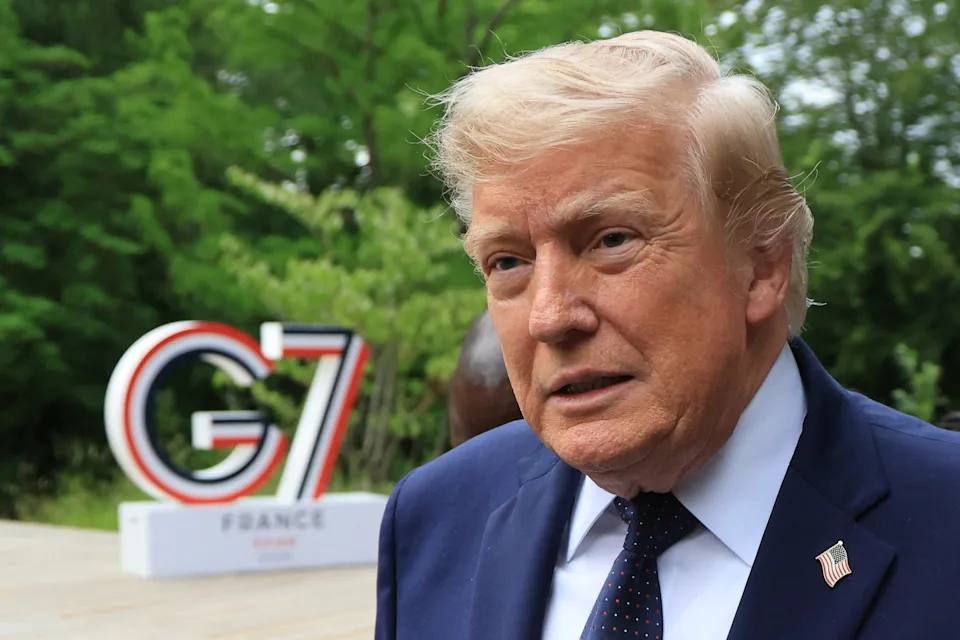 US President Donald Trump arrives to attend a musical interlude before a
gala dinner as part of the G7 summit, in Evian, eastern France, on June
16, 2026. A G7 summit is set to take place June 15 to 17 in the French
town of Evian-les-Bains near Switzerland and it will be attended by
country leaders as well as the EU's foreign policy chief and ministers
from Brazil, Canada, the United Arab Emirates and Turkey. (Photo by
Ludovic MARIN / POOL / AFP via Getty Images)
US President Donald Trump arrives to attend a musical interlude before a
gala dinner as part of the G7 summit, in Evian, eastern France, on June
16, 2026. A G7 summit is set to take place June 15 to 17 in the French
town of Evian-les-Bains near Switzerland and it will be attended by
country leaders as well as the EU's foreign policy chief and ministers
from Brazil, Canada, the United Arab Emirates and Turkey. (Photo by
Ludovic MARIN / POOL / AFP via Getty Images)
(Bloomberg) -- The US and Iran are preparing to formally sign an interim peace deal that has left both sides claiming victory, with details of the accord still emerging and energy insiders skeptical of how fast it can reopen the Strait of Hormuz.
Most Read from Bloomberg
The text of the so-called memorandum of understanding — which opens the way to two months of negotiations on Iran's nuclear program and other issues — has yet to be published. A near-final draft seen by Bloomberg News shows Iran set to receive sanctions waivers that allow it to sell oil immediately, with other financial incentives deferred.
A US official said the full accord might be published in the next two days before a signing ceremony. That event is scheduled to take place in the Bürgenstock, a mountain resort overlooking Lake Lucerne, the Swiss foreign ministry said Tuesday. Vice President JD Vance is expected to head the American delegation, while Iran will likely be represented by Parliament Speaker Mohammad Bagher Ghalibaf.
President Donald Trump is in France for a Group of Seven summit, where the Iran war — which has caused energy prices to soar — is featuring prominently. European nations like France, the UK and Italy are ready to help clear the Strait of Hormuz of mines if needed, though they're wary of potential risks to their ships and skeptical that it can fully reopen by Friday as Trump has promised.
Read the 14-Point Draft Memorandum Between the US and Iran
Speaking at the summit on Tuesday, Trump said the agreement was a "done deal" that will prevent Iran from developing nuclear weapons, adding that the US would not pay war reparations or invest money in Iran. The president said Tehran's leaders "have to prove themselves, I think, before any of us go in there."
Trump also held talks Tuesday with United Arab Emirates President Sheikh Mohamed bin Zayed and Qatar's Emir Sheikh Tamim bin Hamad. Those countries may play a part in helping create, along with the US, a $300 billion development fund for Iran in the aftermath of the conflict.
The draft seen by Bloomberg says the US and its regional partners would create a plan to provide that amount in financing for Iran's rehabilitation and economic development.
The US will look to other countries and the private sector to pledge investments, the American official said. Iran says the war, which began on Feb. 28 with a US-Israeli bombardment, cost it more than $250 billion in economic damage.
Iranian officials have said the MOU would lead to them getting access to tens of billions of dollars of frozen funds held in places such as Qatar. The draft seen by Bloomberg says the US undertakes that those funds "will be released and made fully available" without setting a timeline.
Iran has been under US sanctions since the 1979 revolution that overthrew the shah. Approximately $12 billion in Iranian funds were frozen at that time, according to an analysis by the Atlantic Council. Subsequent decades saw additional US sanctions as well as sanctions from other countries, especially during the run-up to the Joint Comprehensive Plan of Action on Iran's nuclear program, which was implemented in 2015.
Estimates of the total amount of Iranian government assets sitting in accounts globally vary widely, ranging from $24 billion to upward of $100 billion. In 2023, the Biden administration had planned to make $6 billion of Iranian oil revenue available to Iran via an account for humanitarian aid managed by Qatar but that plan was suspended following the Oct. 7, 2023 attacks on Israel by Hamas.
Oil prices have fallen sharply since Trump said late last week an agreement was imminent. Brent crude edged higher early Wednesday after sliding about 5% to end below $79 in the previous session.
Lower demand in China, as well as the US and other nations running down their emergency petroleum stockpiles, have also helped lower prices. Those reserves will likely need to be rebuilt once the Hormuz strait is open again.
Many European governments, energy investors and shipping companies have reservations about how fast the strait — through which a significant portion of the world's supplies of oil, liquefied natural gas and aluminum normally flow — can be returned to prewar conditions.
Beyond the potential need to clear the waterway, there's a longer-run question of whether Iran will allow free passage.
Tehran has signaled it will charge vessels navigation fees after the 60-day negotiating period under the new US-Iran talks. Trump said Tuesday at his meeting with the UAE leader that the strait would be "permanently" open toll-free. A day earlier, a senior US official told reporters that the strait's status beyond the 60-day negotiating period would be up for discussion.
Vance defended the deal on Monday, saying it would be built around a verification system to ensure Iran follows through on its pledges. Senate Republicans said they're pressing the Trump administration for details and signaled Congress will ultimately vote on the final agreement.
Neither the US nor Iran is hiding its distrust of the other. The White House says Trump won't hesitate to return to strikes if he thinks Tehran's leaders aren't abiding by the deal's terms. Iranian officials have warned that the US twice launched attacks on the country during the past year while negotiations were underway.
Trump's frustration with the war he initiated nearly four months ago has been increasingly visible and his focus has often drifted elsewhere, including to his renovation projects in Washington and festivities surrounding the 250th anniversary of US independence. The president, who turned 80 on Sunday, looked tired when he arrived at the G-7 summit on Monday. He traveled only after attending a mixed martial arts event at the White House that ended well after midnight in the US.
Israel's war against Iran-backed Hezbollah militants in Lebanon is another potential spoiler to a successful deal. The MOU is likely to state there must be a ceasefire on "all fronts," including Lebanon.
Israeli politicians have called for continuing the fight against Hezbollah, which has fired missiles and drones into Israel in support of Iran.
--With assistance from Paul Wallace, John Bowker, Steven T. Dennis, John Harney, Eltaf Najafizada and Jon Herskovitz.
(Updates with sanctions timeline, starting in 10th paragraph.)
Most Read from Bloomberg Businessweek
This week top market trends.
-
GOP lawmakers' portfolios are migrating to Trump favorites like Intel and bitcoin
2026-05-29 :: general :: yahoo finance -
Indian rupee hits record low as global bond yield surge compounds oil pain
2026-05-18 :: foreign exchange :: reuters -
Thomson Reuters faces shareholder vote over ICE contracts
2026-06-10 :: companies :: reuters
Recent global market news
-

8 Money Moves You Can Make This Month To Strengthen Your Retirement Plan
2026-06-11 :: :: GOBankingRates