Link copied
Shipping companies are beginning to pass along over $1 billion in tariff refunds to customers.
companies :: 5hrs ago :: source - yahoo finance
By Ben Werschkul
FedEx (FDX) put a number to the tariff refunds it has received from the US government so far: $800 million, which it said is being "held for refund to customers."
Brie Carere, the company's chief customer officer, said on the Tuesday's earnings call that payouts to customers would begin in August.
It was the latest evidence that shipping companies — who made a strong initial tariff refund push back in April — remain at the forefront of the effort to both seek payback from the US government for duties illegally collected under the International Emergency Powers Act of 1977 and also pass on the money to customers.
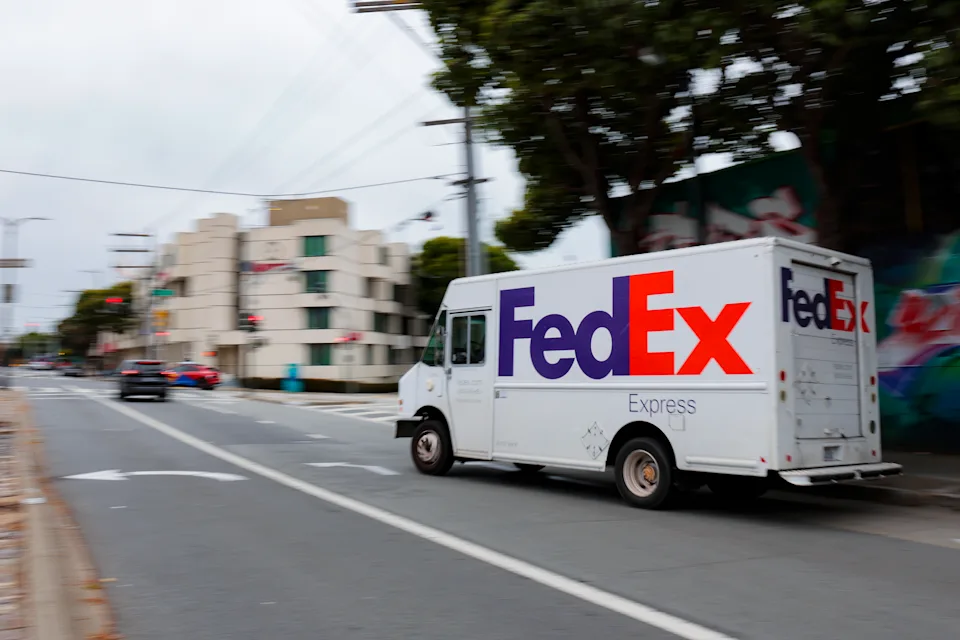 A FedEx truck drives in San Francisco in June. (Heather Diehl/Getty Images). Heather Diehl via Getty Images
DHL (DHL.DE) confirmed to Yahoo Finance this week that money is already flowing to its customers. A spokesperson declined to put a dollar value on the tariff refunds the company had requested but said some money has already come in and "DHL is reconciling those amounts and returning the funds to the customers that originally paid the duties."
As for UPS (UPS), CEO Carol Tomé said on a recent earnings call that her company could be in line for $5 billion in refunds in total and that it had applied for about $500 million of that immediately as part of phase 1 of the government program.
"We are just a pass-through," she said. "As soon as we get that money, we are going to remit it right back to our customer."
UPS added in a statement, "We will expand our efforts as CBP launches future phases."
Indeed, shipping companies will be eligible for even more tariff refunds soon, with phase 2 of the government's CAPE program set to launch on June 29 and phase 3 expected by the end of July.
These expansions will allow more tariffs to be eligible for refunds, depending on factors like when they were paid over course of the last 14 months since President Trump announced the blanket duties.
 A DHL cargo plane is seen in Italy in April. (Riccardo Milani / Hans Lucas / AFP via Getty Images). RICCARDO MILANI via Getty Images
Other companies' plans for refunds
At stake is an estimated $166 billion in tariffs total.
For shipping companies, the process of passing along refunded money is more straightforward than for other businesses. They often act as the Importer of Record (IOR) for smaller companies, with tariffs appearing as a line item on customers' invoices. The transparency of those tariffs has led to considerable pressure from customers.
Many other types of companies have also been on the receiving end of a push from customers, who have filed over a dozen lawsuits. In response, some companies have pledged to pass along the money but in somewhat more vague terms that reflect how issuing refunds isn't quite as simple a process if the cost of the tariff was embedded in the item.
Costco (COST), as one example, has been sued by customers seeking refunds and has promised to pass along the money. CEO Ron Vachris said in a recent earnings call that the money would be returned to customers "in some form."
Walmart (WMT) has also telegraphed how it plans to spend its refunds, announcing price cuts on 7,200 products.
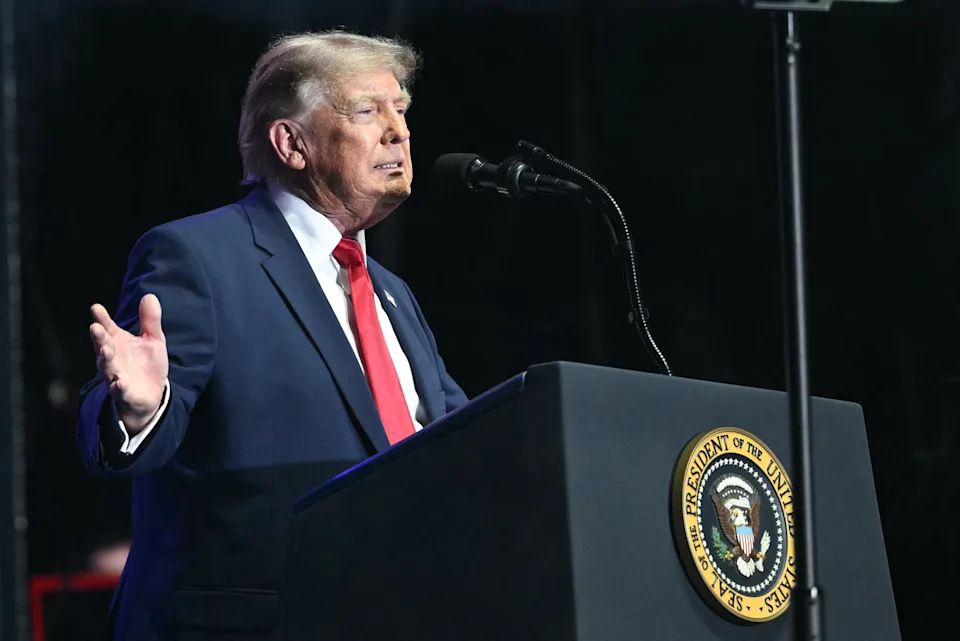 President Trump speaks during a kick-off celebration for the "Great
American State Fair" on the National Mall in Washington on June. (Mandel
NGAN / AFP via Getty Images). MANDEL NGAN via Getty Images
President Trump speaks during a kick-off celebration for the "Great
American State Fair" on the National Mall in Washington on June. (Mandel
NGAN / AFP via Getty Images). MANDEL NGAN via Getty Images
The complex tariff refund process also comes as President Trump's trade moves continue to stoke uncertainty about the trade landscape.
Currently, many companies are facing 10% global tariffs put in place under Section 122 of the Trade Act of 1974 — but those duties are facing a legal challenge with refunds also possible.
That will be followed by a new, permanent tariff setup expected to be in place as early as July.
As FedEx CEO Raj Subramaniam put it in this week's earnings call, shifting global trade policy remains a challenge.
"We achieved these results despite several significant headwinds, particularly global trade policy changes," he said.
Ben Werschkul is a Washington correspondent for Yahoo Finance.
This week top market trends.
-
Oil price falls to levels not seen since before Iran war
2026-06-25 :: commodities :: bbc news -
Gas prices fall below $4 per gallon as oil loses steam
2026-06-19 :: commodities :: yahoo finance -
Nasdaq slides as report of OpenAI IPO delay rattles tech stocks
2026-06-26 :: stock :: yahoo finance