Link copied
China Hedge Funds That Won Big on AI Start Looking for Exits.
stock :: 4hrs ago :: source - bloomberg
By Bloomberg News
(Bloomberg) -- Chinese hedge funds that made hefty gains on artificial intelligence-linked stocks this year are starting to dial back their exposure, telling investors they are on high alert for signs the rally is becoming unsustainable.
Most Read from Bloomberg
Thailand Scraps Plan to End Visa-Free Entry for Indian Tourists
US Hits Iran With Strikes, Blockade as Trump Plans Hormuz Charge
Shanghai Everlead Capital told investors in its Growth Strategy No. 3 Fund, which returned 164% this year through May 31, that it has trimmed positions in optical communications and advanced packaging companies, according to an investor letter seen by Bloomberg News.
Hunjin Capital's Yueyang G1 fund, which was up by a third in the first five months of the year, sold some of its AI stocks, according to its May investor letter. The firm, which manages more than 5 billion yuan ($739 million), said it had identified specific triggers that would justify a broader exit.
China's AI bulls aren't yet warning the bubble is about to burst, in contrast with some of their more skeptical rivals. But an examination of performance letters recently sent to investors in the country makes clear that even funds that have generated bumper returns from the AI trade are now starting to get nervous.
"You can take advantage of the frenzy, but never become the frenzy," wrote Dan Bin, a well-known fund manager at Shenzhen Oriental Harbor Investment Management Co., in the firm's May letter.
Dan told investors that 2027 may be the year when AI capital expenditure reaches an inflection point, finally slowing down after years of breakneck growth. His firm runs more than 10 billion yuan in assets.
Chinese funds join a cohort of investors concerned that this year's surge in AI-related stocks, including semiconductor and memory-chip companies, may have gone too far, too fast. The Philadelphia Semiconductor Index has soared almost 80% this year alone, powered by Micron Technology Inc. and Intel Corp.
The global rally in AI stocks has been a dividing line in Chinese equity funds' performance this year. Many of those betting on AI have posted big gains, while funds that avoided the sector are largely trailing the market.
Trigger Points
Hunjin Capital told investors that they should be on the lookout for a social backlash against AI, a plateau in model improvement and a loosening supply chain for the technology. It said storage makers could see their huge profit margins squeezed as AI firms find more alternatives.
The firm started partially cutting AI positions "where market consensus is overly high and the risk-reward ratio is deteriorating," while gradually adding positions in some traditional stocks, Hunjin's founder Li Yue told investors in the May letter.
Shanghai Chaser Asset Management Co.'s Zhang Xiuqi said he's watching out for slowing growth in AI model revenue, falling compute-leasing prices, and declining cloud-company capital spending as indicators of whether the AI boom is ending. The firm manages more than 5 billion yuan.
In bears' eyes, the signs of stress are already clear. Shanghai Banxia Investment Management Center cited pressure on revenue growth at Anthropic PBC as evidence "the trigger for the AI bubble to burst has already appeared."
Anthropic's annualized run-rate, a closely watched metric for AI bulls, will fall short of market expectations as large tech companies will recoil at the rising cost of tokens and its competitors may erode its popularity among programmers, the macro fund wrote in its May investor letter.

To be sure, the bulls are in no hurry to call it quits yet. Everlead Capital said overseas storage leaders' growth potential "remains vast." Hunjin Capital said the rally is "driven by real earnings," and Chaser Asset noted the boom is supported by solid industry fundamentals, differing from the Internet bubble in 2000.
But the tipping point may be approaching. Hunjin raised its AI hardware "progress bar," a gauge of how far the investment cycle has advanced, to 60 out of 100. That's up from just 30 in February.
"Of course, we won't wait until 90 or 100 to start selling," the firm told investors.
Most Read from Bloomberg Businessweek
This week top market trends.
-
Kevin Warsh on tap to make his first appearance before Congress
2026-07-14 :: watchlist :: yahoo finance -
Oil hits four-week high as US-Iran conflict escalates
2026-07-14 :: commodities :: reuters -
Tariff refunds accelerated sharply in June as the US paid out almost $50 billion to businesses
2026-07-14 :: general :: yahoo finance

Recent global market news
-
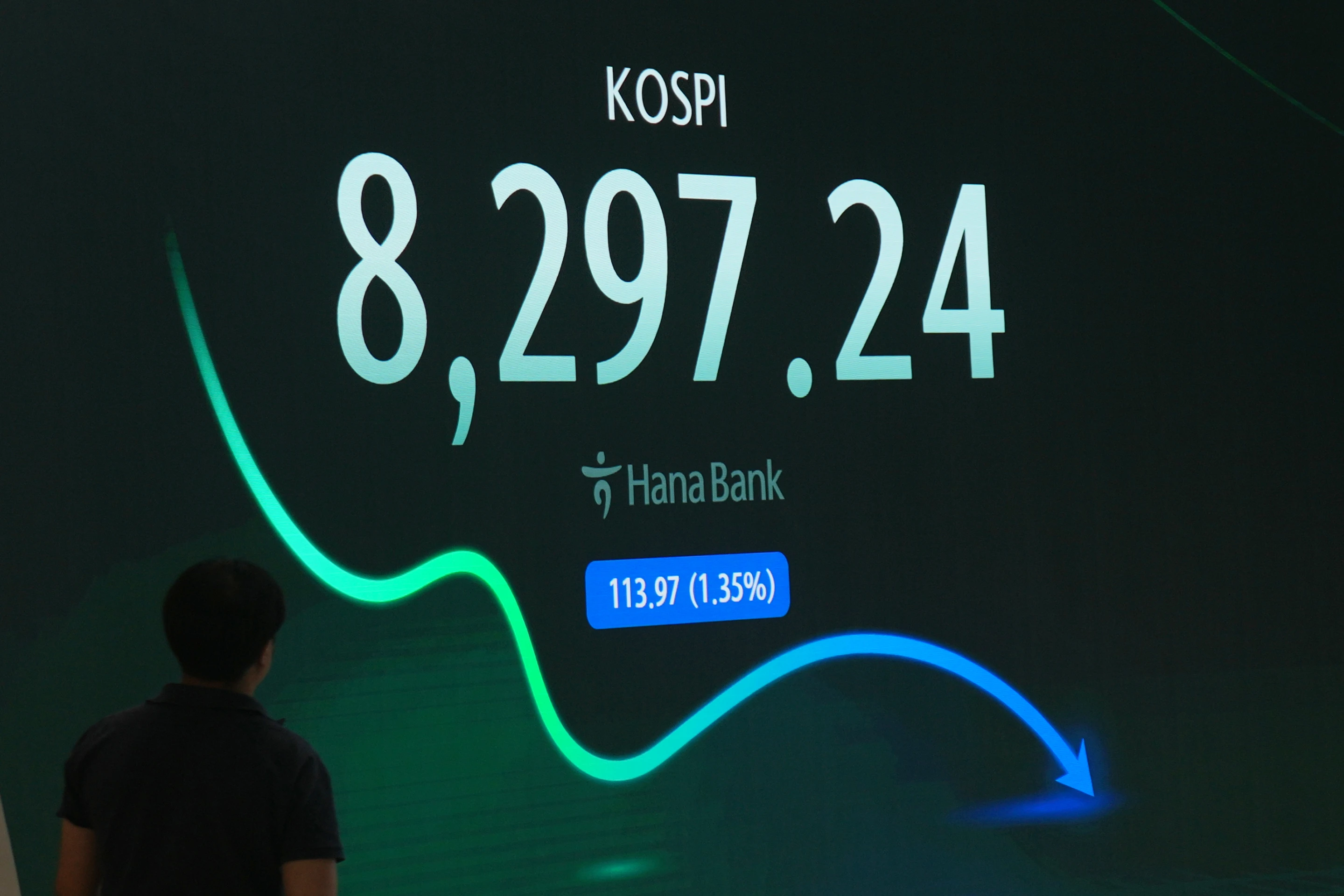
Oil prices jump and world shares are mixed as US and Iran carry out airstrikes
2026-07-13 :: :: apnews