Link copied
The Rise of Ethereum, Bitcoin, and digital currencies.
crypto :: 1day ago :: source - investorshd
By Adnan Khan, InvestorsHD
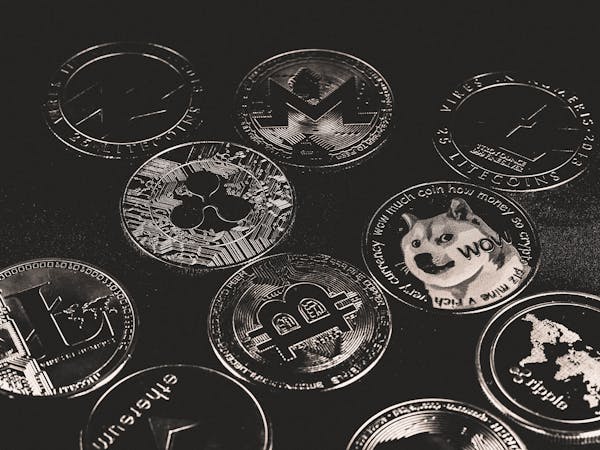 The Rise of Ethereum, Bitcoin, and digital currencies. Image source: Pexels
It has been nearly two decades since the world’s first digital currency, Bitcoin, was launched in 2009. Bitcoin to date is the most popular and expensive digital currency. It has seen a remarkably volatile pricing history for several reasons. There have been other cryptocurrencies around, importantly, Ethereum, which is the second most popular digital currency.
Cryptocurrency and blockchain technology terms are often used in conjunction. Blockchain has been the technological enabler of digital currencies.
Blockchain and Cryptocurrency
It’s fair to assume that Blockchain has been used for data storage of cryptocurrencies like Bitcoin. In its practical usage, blockchain can offer similar database storage and security benefits for other types of uses as well.
Blockchain
Blockchain is a technology that stores data in blocks. It was first introduced in 1991 by Stuart Haber and W. Scott Stornetta. It’s a formal collection of large database sets. Each new information set is stored in the form of a new block. Once a block is fully stored with information, it is connected with a new block in the chain. These information blocks are connected together using cryptography. The connection of these blocks becomes a chronological link, hence the term blockchain.
It's important to mention that cryptocurrency is built on using blockchain technology. It means blockchain technology can be used for several other purposes:
- Large database storage
- Transaction verification
- Identity verifications
- Supply chain management
- Ownership and identity proofs
- Digital contract creation
Cryptocurrency
By the simplest of definitions, cryptocurrency is a digital currency. It is built on the database technology of blockchain. It works as a digital asset that can be used as a medium of currency exchange. It is different from fiat currencies (dollars, Euros) in the sense that it does not exist tangibly.
The foundation of cryptocurrency is the blockchain technology that is used to store information securely using cryptography. It's safe to assume that both technologies are currently interlinked and interdependent.
Bitcoin – History
Bitcoin is the most prominent cryptocurrency. It was introduced in 2009 by an anonymous founder, Satoshi Nakamoto. It is a digital currency with no physical currency notes or coins. The bitcoin currency can be traded against normal currencies like Dollars or commodities like gold.
The price of bitcoin depends largely on the same demand and supply rules as the commodity. However, a special feature of Bitcoin is the halving feature. It means Bitcoin cannot surpass a finite number once it reaches a certain figure. The maximum number of Bitcoins that can ever be mined is cap at 21 million bitcoin. This very fact derives high demand for the currency; hence, we see largely higher prices in bitcoin than any other commodities or even cryptocurrencies.
Ways to invest in digital currencies.
The most popular option for Bitcoin investments is through cryptocurrency exchanges. Some of the most popular Bitcoin exchanges are Binance and Bitget.
You can also invest in Bitcoin through dedicated Bitcoin ATMs. You’ll need to use the traditional bank debit or credit cards to make the purchase. The other option for you is to buy the bitcoins directly from peers. The Peer-to-Peer lending of bitcoins also works similarly as for any other tradable commodity.
Ethereum – History
Ethereum was launched in 2015 by creator Vitalik Buterin, built on the same blockchain technology as Bitcoin. It is open-source and decentralized software that is used to build smart contracts and distributed apps. It owns a cryptocurrency, Ether.
Ethereum is primarily used as software for digital smart contracts and dApp development. It's famous for developing its digital currency, Ether.
Ether works similarly to many other Cryptocurrencies like Bitcoin. Its investment and exchange options are also similar to those of Bitcoin.
The Rise of the Cryptocurrency Market
The concept of cryptocurrency that was launched with Bitcoin in 2009 has fairly grown globally. The current Cryptocurrency market capitalization stands at $2.32 trillion according to Coinmarketcap data. The daily cryptocurrency trading volumes surpass $70.21 billion as of today.
Bitcoin is the leading cryptocurrency with a current market cap of $ 1.3 trillion as of today. Ethereum is the second-largest digital currency with market cap around $238 billion. There are roughly 17,151 cryptocurrencies currently trading globally.
Cryptocurrency exchanges and online brokerage firms remain the popular choice for trading. Cryptocurrencies have dedicated exchanges and platforms for trading as well. You can also buy cryptocurrencies like Bitcoin and Ether through mobile apps such as Robinhood, WeBull, and Binance.
Bitcoin was the first cryptocurrency launched back in 2009. It was launched to introduce it as a digital currency that works as an alternative to fiat currency. The prime motive behind introducing digital currency was daily digital transactions and an alternative to traditional banking solutions.
Since its inception, Bitcoin has evolved into an asset class that is now largely traded against the US dollar. The spark in demand for Bitcoin has derived higher trading volumes in Bitcoin as well as other cryptocurrencies such as Ethereum.
Bitcoin Price History
When bitcoin was launched, its equivalent price in dollars was a meager $ 0.08. The current price of a single bitcoin now is around $ 67,332 while bitcoin’s current market cap stands at $1.3 trillion.
Initially, it remained a low-profile digital currency with an average price trading around $1.0. Bitcoin received its major price boost in 2014 when it touched the $1,000 mark. In 2017, it started around the $ 1,000 mark and ended the year with an all-time high of $ 19,150.
Bitcoin Pizza day, May 22 2010 was a remarkable history when a computer guru named Laszlo Hanyecz paid 10,000 BTC for two Papa John's pizzas worth roughly $41 at the time. Today, that same amount worth over $650 million with bitcoin price trading above $67,567.
Many investors preferred a digital cryptocurrency over traditional asset classes for investment do to economic recession and declining faith in the US dollar. In 2020, Bitcoin crossed the all-time high price mark several times making it one of the top performing asset. Today, it is trading above the $60,000 mark while many investors called bitcoin digital gold.
Future Predictions on Bitcoin Price
A unique factor in bitcoin driving its high demand is the finite number of bitcoins unlike fiat currency that can always be printed without limit. Experts predict Bitcoin can reach as high as $ 133,000 to 250,000 price by 2026. Some forecasts suggest a more conservative range of $ 100,000 to $ 150,000 mark influenced by market trends and global economic conditions.
Ethereum Price History
Ethereum is the second-largest cryptocurrency, launched in 2015. It’s currently trading around $ 1,963. Its total market cap currently stands at $238 billion. It does not have a finite number of currency issuance like Bitcoin.
Ethereum received its first major price boost in 2017 when it crossed the $ 500 mark. It soon fell back to below the $100 mark in 2018. With the rising demand in cryptocurrency and the highly traded bitcoin scarcity.
Future Predictions on Ethereum Prices
Ethereum is a software company that has built the Ether digital currency. It uses the same cryptography built on blockchain technology as Bitcoin. Since much of its traits are similar to Bitcoin's, it should come as no surprise that it closely follows the market movements as Bitcoin does.
Ethereum price predictions for 2026-2030 are generally bullish, with forecasts suggesting a potential range of $2,900–$5,400 by end-of-year 2026 and increasing to over $10,000–$20,000+ mark by 2035, driven by institutional adoption, network upgrades, and deflationary tokenomics with long-term forecasts heavily reliant on its dominance in decentralized apps.
What Factors Contribute to The Rise of Cryptocurrency Prices?
Cryptocurrencies have become the formal trading asset classes, Bitcoin and Ethereum, if not all of the digital currencies. Several fundamental and technological factors affect the rising demand and prices of cryptocurrencies.
2020-2021 will saw many digital currencies smashing their all time high. The price boost is heavily attached to convid19 lockdown while the world sit at home searching for alternatives to boost their income; Cryptocurrencies became the favorable investment choice.
Digital Currency
Cryptocurrencies use blockchain technology that utilizes cryptography. The same blockchain technology can be used by traditional financial and banking institutions. Hence, cryptocurrencies have emerged as much more than mere disruptive factors.
Frictionless Cross-Border Transfers
Cryptocurrencies like Bitcoin offer frictionless cross-border transfers. It makes digital currencies highly accessible to anyone around the world, sending money as fast as possible with lower to zero transaction cost compare to our traditional banking today. On the other hand, its blockchain technology means it's a highly secure digital currency as well.
Corporate Investment
Corporate and treasury management institutes like MicroStrategy Inc. and Square Inc. have shown interest in using bitcoin as their form of the base currency with Strategy leading the position with over 700,000 Bitcoin holding as of today.
The corporate investment and utilization of cryptocurrencies like Bitcoin have also helped in the rising prices.
Bitcoin Halving
The Bitcoin halving is done every four years. In halving events, the algorithm changes cut down the total number of bitcoins in the issue. Hence, it keeps the demand and supply in check making bitcoin more harder to mine; and the more harder to mine the more scarcity it gets which is one of the reason Strategy adopt bitcoin holding as their major precious asset.
Traditional Demand and Supply Rule
Much like common tradable assets, Bitcoin, Ethereum, and other cryptocurrencies are prone to the traditional demand-supply rule as well. Since Bitcoin has an upper limit of maximum tradable coins, it drives the high demand and increase in prices.
Economic Instability – Countries and Global
Global economic stability and countries with highly depreciative currencies against the US Dollar find it convenient to trade in Bitcoins. The global economic recessions have pushed the demand for non-traditional assets such as Bitcoins and Ethereum.
References: coinmarketcap.com, Coincodex.com, Demandsage.com, Coingape.com, Capital.com
This week top market trends.
-
Euro zone businesses perform better than expected in February as manufacturing bounces back, PMI shows
2026-02-20 :: general :: reuters -
Sterling steady as traders eye Bank of England decision
2026-02-03 :: foreign exchange :: reuters -
Big Tech earnings, Fed meeting feature as markets end January with busiest week of Q1: What to watch
2026-01-26 :: watchlist :: yahoo finance -
Bitcoin hovers near $70,000 as analyst calls sell-off 'a mere crisis of confidence'
2026-02-10 :: crypto :: yahoo finance -
Hims & Hers drops plan for knockoff of Novo Nordisk's new Wegovy weight loss pill
2026-02-08 :: companies :: apnews
Recent global market news
-

Billionaire Bill Ackman Just Loaded Up on This Powerhouse AI Stock. Should You?
2026-02-17 :: :: motley fool