Link copied
Fed expected to hold rates steady. But an interest rate hike isn't off the table.
watchlist :: 6hrs ago :: source - yahoo finance
By Jennifer Schonberger
The Federal Reserve's decision on Wednesday to hold interest rates steady or hike them is one of the most unclear in years.
Renewed tensions in the Middle East have pushed oil prices higher again, feeding the hawks' worries that energy prices could translate into sticky, broad-based inflation and necessitate a rate hike. At the same time, the latest inflation report showed prices cooled, giving the central bank some breathing room and bolstering the case to hold rates steady.
Former Kansas City Fed president Esther George said there's a 50-50 chance the Fed will either hold rates steady or raise them.
"The arguments you could create for them holding or raising seem pretty valid, but Kevin Warsh is not going to give you any tidbits to lead in the direction he wants to go," George said in an interview.
"It wouldn't surprise me if they hiked by 25 basis points at this meeting," George added. "The two-year [Treasury yield] is higher than the fed funds rate, so that may be enough to move people, but I think September is more likely in this sense."

Read more: How the Fed rate decision affects your bank accounts, loans, credit cards, and investments
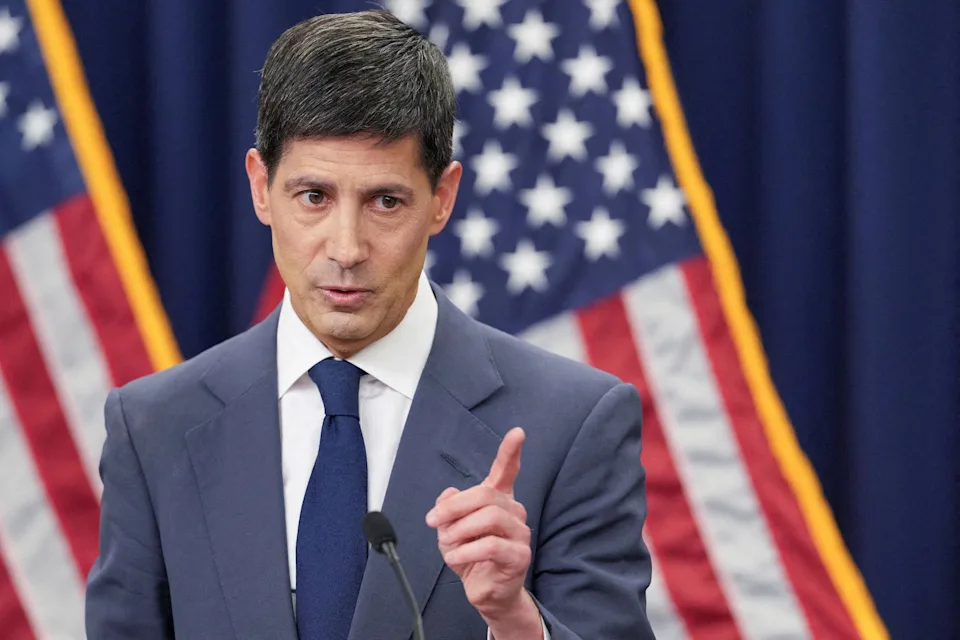
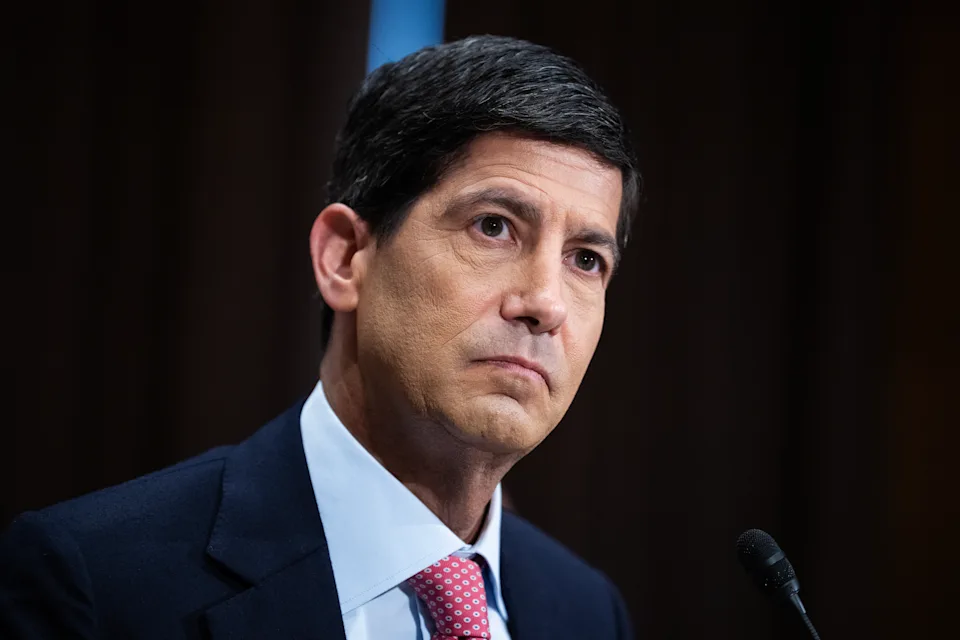 Federal Reserve Chairman Kevin Warsh testifies during the Senate
Banking, Housing, and Urban Affairs Committee hearing on July 15. (Tom
Williams/CQ-Roll Call, Inc via Getty Images) · Tom Williams via Getty Images
Federal Reserve Chairman Kevin Warsh testifies during the Senate
Banking, Housing, and Urban Affairs Committee hearing on July 15. (Tom
Williams/CQ-Roll Call, Inc via Getty Images) · Tom Williams via Getty Images
The bond market has signaled to the Fed that interest rates aren't high enough, with yields across maturities for the two-year Treasury bond to the 30-year Treasury bond (^TYX) rising on inflation concerns and anticipation of a rate hike. The yield on the two-year, a leading indicator of the Fed's interest rate policy, has sustained its place at 4% or higher since mid-May, indicating investors anticipate a 25 basis point hike this year.
Futures markets put the chances of the Fed holding rates at 62%, down from 87% on July 17, while chances of a hike have risen to 37%, up from just 12%. If odds are below 80%, there's no conviction in markets, giving the Fed a window to hike if it wanted to.
Loretta Mester, former Cleveland Fed president, said she thinks the Fed will keep rates steady on Wednesday but that a couple of officials will dissent.
"For sure, they're going to be discussing if it's time to move the interest rate up or not," Mester said in an interview. "They're going to have to ask themselves whether policy is at the right level to get inflation moving back down to 2%. Chair Warsh has been pretty vocal on saying that they're not going to tolerate inflation."
Officials prepare for a 'good family fight'
In recent years, the central bank telegraphed its decisions to markets in advance. But Chairman Kevin Warsh wants to bring the central bank back to an era with more opaque communications to markets — one that harkens back to former chair Alan Greenspan.
Warsh has repeatedly said that he wants a "good family fight" in interest rate-setting meetings. He's likely to get one this week.
At the Fed's meeting in June, half of the officials expected they would need to raise rates this year, while the other half thought they could hold rates steady. Warsh didn't show his hand and could tip the central bank in either direction.
Minutes from the June meeting revealed that if inflation dissipates, most officials favor holding rates steady or eventually lowering them. However, if inflation remains elevated due to a combination of stable job market conditions, strong AI demand, the Middle East conflict, and the effects of tariffs, almost all officials see the need to raise rates.
Several officials, including Fed governors Lisa Cook, Chris Waller, and Philip Jefferson, have suggested they're content to hold rates steady in July but would consider a rate hike if inflation doesn't cool further.
Other officials, including Dallas Fed president Lorie Logan, believe the time is now to act. Logan said in a speech in mid-July that inflation has been too high for too long and does not appear to be on track to return to 2%.
"I currently believe modestly higher interest rates would better balance the outlook and risks for the FOMC's maximum employment and price stability goals," Logan said.
The case for holding rates steady
The case for holding rates depends on inflation coming down in the next few months.
The June "core" Consumer Price Index, which excludes volatile food and energy prices, offered a welcome relief. Core CPI dropped to 2.6% from 2.9%, as a near 10% decline in gasoline prices helped pull headline inflation down to 3.5% from 4.2%. Still, that's only one month, and tensions have flared in the Middle East, sending oil prices north again.
Wilmington Trust chief economist Luke Tilley said he expects the next couple of inflation reports to show a downward trajectory after core inflation, as measured by the Personal Consumption Expenditures Index, peaked at 4.8% on a three-month annualized basis in February.
Tilley noted that while there are risks that the war's impacts on energy costs could flow through to core inflation, "it hasn't yet."
Tilley maintained that the economy is strong enough to avoid a recession but not strong enough to drive up inflation, because US consumers cannot afford to spend at the gas pump while also spending in other categories, such as dining out. If oil prices go above $100 per barrel, as they did last week, people will cut back on spending, and high inflation will come entirely from gas, he said.
He said he doesn't think the Fed will hike interest rates this week, and he expects the Fed's next move to be a cut — not a hike — in September, followed by another cut after that.
"If they hike [in July], I think they're going to have to reverse it within six months," Tilley said.
New York Fed president John Williams also believes inflation has peaked and suggested holding rates steady rather than raising them.
"There are encouraging reasons to expect that inflation has peaked and should edge down in coming quarters," Williams said on July 15, citing a decline in energy and housing prices. He also thinks the inflationary effects of tariffs have largely played out, even as the Trump administration replaced expiring tariffs with new ones.
The case for hiking
Other officials aren't assured that inflation is heading in the right direction, given elevated energy prices in the wake of the Mideast conflict.
They point to shock after shock — from the pandemic to Russia's invasion of Ukraine to tariffs and now the Mideast conflict — that have kept inflation above the Fed's 2% goal for more than five years. They also reference the raging demand for AI infrastructure components that have pushed up prices.
These officials question whether they can look through the surge in energy prices and whether rates at current levels are restrictive enough.
"If inflation isn't starting to move back down, or even if it starts to move back up because we don't really know what's going to happen with oil prices at this point, … I think they've got to take seriously that a recalibration may be the right thing to do," Mester said.
George said that energy prices are still going to remain higher and that fresh tariffs may present a second round of price hikes.
"You've got more than five years being above your target," George said. "The chairman has made a lot of strong comments about inflation being a choice, and so how will he align that with action around today's inflation?"
Warsh has repeatedly said that the Fed will deliver price stability, but hasn't offered guidance on interest rates or on how the central bank will accomplish that.
"I think taking one step could be enough to kind of solidify inflation expectations and then take it as the economy evolves because I know Warsh is really expecting this supply side relief at some point," George said.
Jennifer Schonberger is a veteran financial journalist covering markets, the economy, and investing. At Yahoo Finance, she covers the Federal Reserve, Congress, the White House, the Treasury, the SEC, the economy, cryptocurrencies, and the intersection of Washington policy with finance. Follow her on X @Jenniferisms and on Instagram.
Read the original story on Yahoo Finance featuring images and data insights
This week top market trends.
-
Intel stock rises after Q2 earnings blow past estimates
2026-07-24 :: companies :: yahoo finance -
4 Big Tech earnings reports, a Fed meeting, and $100 oil: It's the busiest week of the quarter
2026-07-27 :: watchlist :: yahoo finance -
Dollar softens as investors weigh Middle East jitters against inflation data
2026-07-21 :: foreign exchange :: reuters

Recent global market news
-
Netflix stock sinks after Q3 revenue falls short, co-CEO says not all views are 'created equal'
2026-07-17 :: :: yahoo finance