Link copied
Your 401(k) Plan Has a Hidden Roth Door. Here’s How to Use It Before 2027.
personal finance :: 3hrs ago :: source - 24/7 wallstreet
By Marc Guberti
Quick Read
High earners can funnel an extra $36,250 annually into a Roth by filling the gap between the $72,000 IRS cap and their deferrals and employer match.
Only 24% of 401(k) plans allow after-tax contributions, and even fewer permit in-service Roth conversions. Both features are required for the strategy to work.
Roth withdrawals don't count toward IRMAA MAGI, helping retirees avoid Medicare surcharges of up to $6,936 per person annually triggered above $218,000 joint income.
Two retirees, same $1 million, same 4% rule, buy one finished with $1.4 million, the other hit $0 in 12 years. Our free reader guide explains the flaw that separated them, and the income-first method built to avoid it.
A 56-year-old software engineer on the r/fatFIRE subreddit recently laid out a familiar problem. She earns $310,000, already maxes her 401(k) deferrals and catch-up, funds a backdoor Roth IRA, and still has cash left over that lands in a taxable brokerage. Her HR portal mentions "after-tax contributions" but she has never used them. She wanted to know if that box was worth checking.
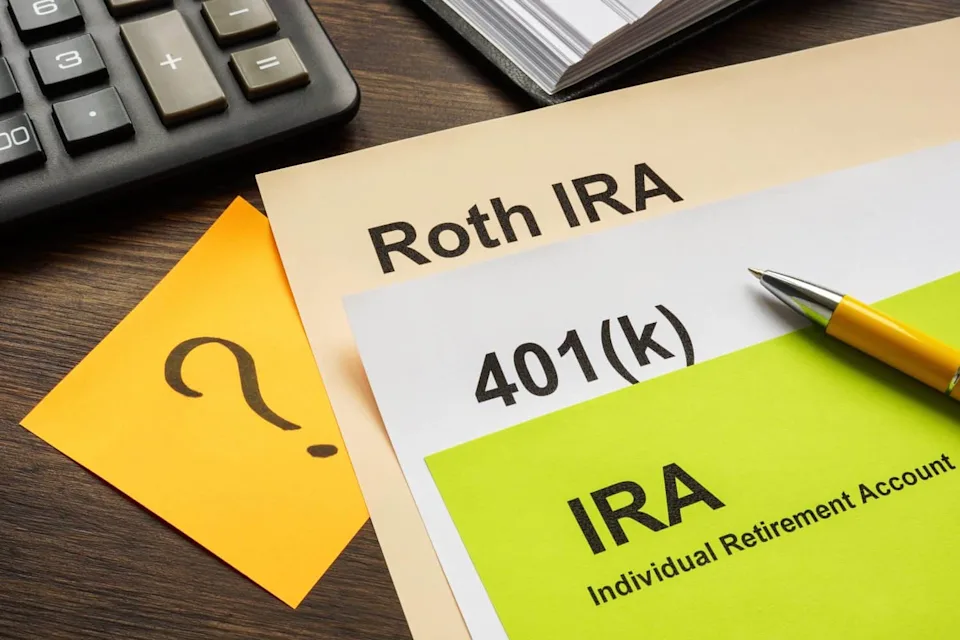 Vitalii Vodolazskyi / Shutterstock.com
For high earners with a compatible plan, checking that box is the single most valuable retirement move available in 2026. It can push an additional $36,250 into a Roth account every year, on top of what already goes in through payroll.
The Math Behind the $36,250
The IRS caps total annual additions to a 401(k) under Section 415(c) at $72,000 in 2026. That ceiling covers everything hitting the plan: your pre-tax or Roth deferrals, the employer match, profit sharing, and after-tax contributions. Catch-up dollars sit above this ceiling and do not count against it.

Assume a typical high-earner scenario. Your Roth or pre-tax deferral hits the $24,500 employee limit. Your employer kicks in a 5% match on a $225,000 salary. That leaves $36,250 of unused space inside the $72,000 wrapper.
The 4% Rule is Broken, Built On A World That No Longer Exists
Every retiree knows about the 4% rule, but it frames retirement as a slow liquidation and still causes retirees with seven-figure accounts to agonize over a dinner out.
There's a different way to run the math that makes more sense today. Build an income floor — dividends, interest, and Social Security that cover your essential bills every month — and you never have to sell shares into a down market just to pay them.
Our free reader guide, The 4% Rule Is Broken, walks through it in about 15 minutes. Access the report here.
The after-tax bucket is what fills that space. You contribute post-tax dollars up to the cap, then execute an in-plan Roth conversion or in-service rollover to a Roth IRA. The contributions themselves were already taxed, so the conversion moves clean principal. Once inside the Roth, growth compounds tax-free and qualified withdrawals never see the IRS again.
A married couple filing jointly can each put $8,600 into a Roth IRA in 2026 if they qualify. High earners generally do not qualify directly and have to use the backdoor. The mega backdoor moves roughly four times that amount, per person, per year, without a phaseout.
Why 2026 Makes This Sharper
SECURE 2.0's Roth catch-up mandate now applies. Any employee 50 or older who earned more than $150,000 in 2025 must route catch-up contributions into a Roth 401(k). The standard catch-up is $8,000. Workers ages 60 to 63 get a super catch-up of $11,250.
Stacking these together, a 61-year-old high earner with a matching plan that permits after-tax contributions can theoretically direct the entire $83,250 annual additions ceiling, plus catch-ups, toward Roth-flavored buckets. Every dollar of future growth avoids ordinary income tax in retirement, which is the tax bracket that most $1M-plus 401(k) balances land in once RMDs and Social Security stack up.
Traditional 401(k) withdrawals in retirement can push a couple past the $218,000 joint IRMAA threshold, triggering Medicare surcharges that scale from roughly $1,148 to $6,936 per person annually. Roth withdrawals do not count toward that MAGI calculation. Building a larger Roth base now buys future flexibility to stay below the surcharge tiers.
The Catch: Your Plan Has to Cooperate
Vanguard's data shows that only 24% of 401(k) plans allow after-tax contributions, and a smaller subset permit in-service Roth conversions. Without both features, the strategy does not work cleanly. Contributing after-tax without a conversion mechanism traps you in a hybrid account where earnings grow tax-deferred, not tax-free.
Timing also matters. Any earnings that accrue on after-tax contributions before conversion become taxable at conversion. Plans that offer daily or automatic in-plan Roth conversions eliminate this friction. Plans that only allow annual conversions can leave months of taxable growth on the table.
Three Moves to Make This Quarter
Pull your Summary Plan Description and search for the phrases "after-tax contributions" and "in-plan Roth rollover" or "in-service distribution." If both appear, you have the machinery. If only after-tax appears, call HR before contributing a dollar.
Calculate your specific after-tax room: $72,000 minus your planned employee deferral minus your projected employer match and profit sharing. That number is your annual mega backdoor headroom. Elect a payroll percentage that hits it by December.
Set the conversion to automatic if the plan supports it. If it does not, calendar a quarterly manual conversion. The goal is minimizing the window during which after-tax dollars generate taxable earnings inside the plan.
For a 55-year-old in the 24% bracket with 10 working years ahead, sheltering an extra $36,250 annually into a Roth compounds into a materially different retirement tax picture. The move is available today, and the paperwork is a single election form.
Before Your Next Withdrawal, Run One Number ( It's Not The 4% Rule Everyone Knows)
Take your essential monthly expenses and subtract your guaranteed income — Social Security, plus any pension. What's left is your income gap, and how you close it determines whether retirement runs on share sales or on a paycheck your portfolio writes you every month. Our free reader guide, The 4% Rule Is Broken, shows exactly how to close that gap with portfolio income: a worked example (one retiree needed about $480,000 in income-producing assets to cover his essentials for good), an eight-point conversion checklist, and the 20-year numbers comparing dividends to withdrawals. It's free and takes about 15 minutes to read. Get the guide here before you take your next withdrawal.
Contact editorial@247wallst.com for any questions or corrections.
This week top market trends.
-
Supermicro stock jumps on gross margin raise amid record $60 billion backlog
2026-07-22 :: companies :: yahoo finance -
Oil climbs over 3% to near six-week high as conflict threatens key oil transit routes
2026-07-22 :: commodities :: reuters -
Tesla stock slides after mixed Q2 earnings
2026-07-23 :: companies :: yahoo finance
Recent global market news
-

TSMC to invest another $100 billion in US as Q2 profit blows past forecasts
2026-07-16 :: :: reuters -

Oil climbs over 3% to near six-week high as conflict threatens key oil transit routes
2026-07-22 :: :: reuters -

$3.2 trillion rotation from chips to the 'Magnificent 7' has left the S&P 500 going nowhere
2026-07-16 :: :: yahoo finance