Link copied
Meta misses on Q2 earnings, stock tumbles
companies :: 2hrs ago :: source - yahoo finance
By Daniel Howley
Meta (META) reported its second quarter results after the bell on Wednesday, missing on earnings per share (EPS) but beating on revenue. The company also missed the midpoint for its Q3 revenue outlook, though it narrowed its planned capital expenditure range for 2026.
Meta stock was nearly 9% lower in premarket trading on Thursday, having slumped immediately following the results.
For the quarter, Meta saw EPS of $6.18 on revenue of $60.8 billion. Analysts were anticipating EPS of $7.14 and revenue of $60.2 billion, based on Bloomberg consensus estimates.
The EPS miss came down to $2.4 billion for Meta's legal contingencies and a $1.2 billion charge for severance expenses. Without those, the company would have beat expectations.

For the third quarter, Meta anticipates revenue between $61 billion and $64 billion. Wall Street was looking for a midpoint of $63.1 billion.
Meta's Q2 advertising revenue came in at $59.3 billion versus expectations of $59.07 billion.
Importantly, the company raised the bottom line of its capital expenditure estimates, increasing them to between $135 billion and $145 billion from $125 to $145 billion.
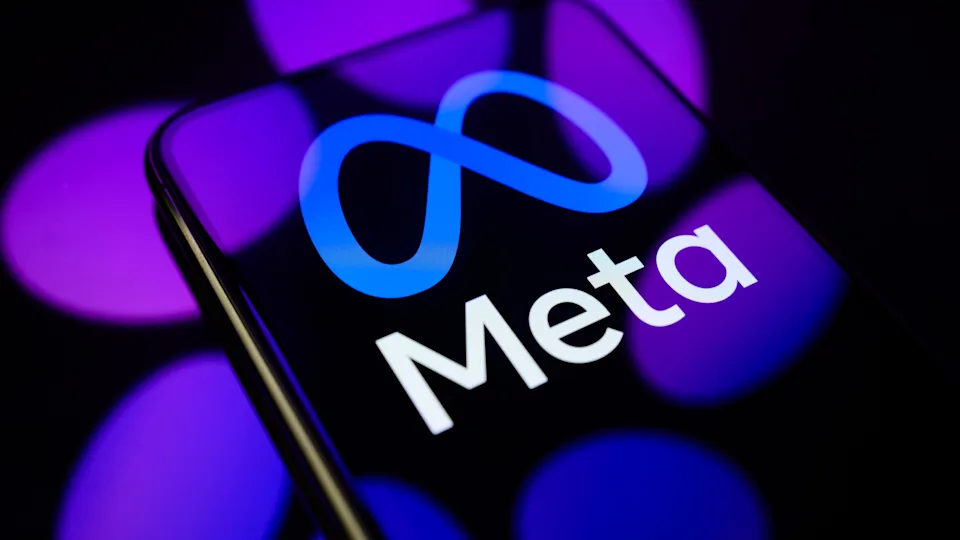 The Meta logo displayed on a smartphone screen in front of the Meta AI
logo in Creteil, France, on July 9, 2026. (Samuel Boivin/NurPhoto via
Getty Images). NurPhoto via Getty Images
The Meta logo displayed on a smartphone screen in front of the Meta AI
logo in Creteil, France, on July 9, 2026. (Samuel Boivin/NurPhoto via
Getty Images). NurPhoto via Getty Images
On Tuesday, Meta and BlackRock announced they are entering into an agreement to build a $14 billion, 1-gigawatt data center in Texas. BlackRock will hold an 80% stake in the site, while Meta will get the remaining 20%.
Earlier this month, Meta CEO Mark Zuckerberg told Bloomberg that it makes sense for the company to explore leasing out some of its data center capacity to customers.
It's not clear how Meta would structure any deals, but it could turn toward SpaceX (SPCX) for inspiration. That company has set up multibillion-dollar arrangements to rent access to its AI capacity to Anthropic (ANTH.PVT) and Google (GOOG, GOOGL).
Meta could also choose to operate similarly to a neocloud company like CoreWeave (CRWV) and simply rent out its hardware as is.
The company also debuted its new Musk Spark 1.1 model this month and revealed an aggressive pricing scheme that significantly undercuts the cost of using models from OpenAI and Anthropic.
Meta charges developers $1.25 per million input tokens and $4.25 per million output tokens. Anthropic currently charges $5 per million input tokens and $25 per million output tokens for its Opus 4.8 model, which Meta compares with Spark 1.1.
By setting prices so low, Meta could take market share from the big AI labs as price-conscious customers seek better deals on AI models.
Email Daniel Howley at dhowley@yahoofinance.com. Follow him on X at @DanielHowley.
Click here for the latest technology news that will impact the stock market.
This week top market trends.
-
Semiconductor stock charts just formed this bearish shape that signals more potential losses
2026-07-28 :: stock :: yahoo finance -
EU hits Google with $1 billion fine over its Play app store and search
2026-07-23 :: watchlist :: apnews -
Magnificent 7 results set to test broadening US stock market
2026-07-29 :: stock :: reuters
Recent global market news
-

241,700 New Millionaires: How Ordinary People Built Extraordinary Wealth in the 2025--2026 Crypto Bull Run
2026-07-23 :: :: investorshd