Link copied
XRP Price Rallied 1,000% Every Time It Crashed Over 60%: Can It Explode Again After Falling 62%?
crypto :: 2026-03-17 :: source - 24/7 wallstreet
By Sam Daodu
Quick Read
XRP has crashed over 60% from a cycle peak three times since 2017, and each crash was followed by a rally of at least 1,000% from the low.
The current 62% drawdown is the mildest of the four XRP crashes over 60%, and it’s the first one happening while Wall Street is actively holding XRP ETF positions.
A recent study identified one single habit that doubled Americans’ retirement savings and moved retirement from dream, to reality. Read more here.
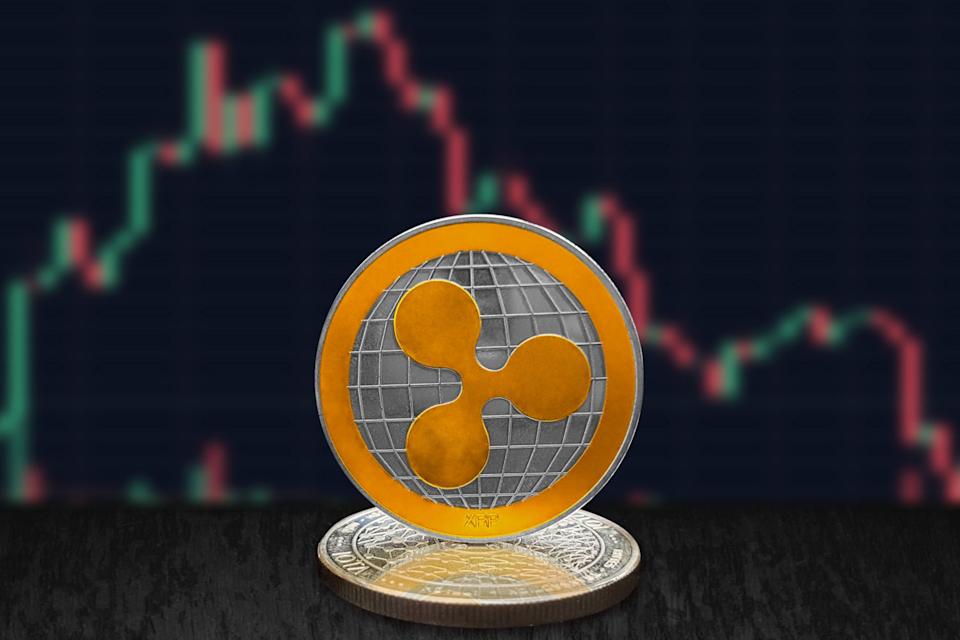
Since 2017, XRP (CRYPTO: XRP) has crashed by over 60% from a cycle peak three separate times. The drops ranged from 62% to 96%, but each time XRP recovered, it rallied between 1,000% and 2,400% from the lows. Although the recoveries took anywhere from eight months to three years, every single rally delivered at least a 10x return from the bottom.
XRP is currently range-bound at $1.35 and $1.45, down roughly 60% from its $3.65 peak—the fourth time it's crashed this much. Now comes the million-dollar question: Will XRP rally over 1,000% again this time, or has the price not bottomed yet?
The Three Times the XRP Price Crashed Over 60% and What Happened Next
 Useacoin / Shutterstock.com
Read: Data Shows One Habit Doubles American’s Savings And Boosts Retirement
Most Americans drastically underestimate how much they need to retire and overestimate how prepared they are. But data shows that people with one habit have more than double the savings of those who don’t.
XRP's three biggest crashes since 2017 all looked different going in. The causes ranged from the crypto bubble bursting to a global pandemic to the SEC suing Ripple, and the recovery timelines ran anywhere from eight months to over three years. Here's how each one played out.
$0.40 to $0.15: May 2017
XRP started 2017 at $0.006 and rallied to $0.40 by mid-May as Ripple's early banking partnerships and a broader wave of crypto speculation pulled money into the token. By June, XRP had dropped to around $0.15, a 62% pullback that erased most of those early gains. From there, the token drifted sideways in the $0.15 to $0.25 range for roughly six months.
Ripple announced a cross-border payments partnership with American Express and Santander in November 2017, and by December the entire crypto market was in full mania mode. XRP went along for the ride. The token ran from $0.15 all the way to $3.84 by January 4, 2018, a 2,460% rally from its mid-2017 low in roughly eight months.
$3.84 to $0.14: 2018 to 2020
After peaking at $3.84 in January 2018, XRP entered the longest bear stretch in its history. The 2017-2018 crypto bubble had burst across the entire market, and XRP dropped to $0.27 by August 2018. The bleeding continued through 2019, and when the COVID-19 sell-off hit global markets in March 2020, XRP fell to between $0.11 and $0.14. From its January 2018 peak to the March 2020 low, XRP lost 96% of its value over the span of roughly two years.
The recovery happened under conditions that should have killed any rally. The SEC filed a lawsuit against Ripple on December 22, 2020, calling XRP an unregistered security. Major US exchanges including Coinbase delisted XRP within weeks, effectively locking the token out of the American market. Despite all of that, XRP rallied from its March 2020 low of around $0.14 to $1.96 by April 2021, a 1,300% return in roughly 13 months while the lawsuit was still active.
$1.96 to $0.29: 2021 to 2022
XRP couldn't hold its $1.96 peak from April 2021 as the broader crypto market rolled over through late 2021 and into 2022. The Terra/LUNA collapse in May 2022 accelerated the sell-off, and XRP dropped to $0.29 by June 2022, an 85% crash from its cycle high. With the SEC lawsuit still unresolved, XRP spent the next two and a half years trading below $1.
XRP got its first break in July 2023 when a judge ruled that selling XRP on public exchanges didn't count as a securities transaction. The token briefly jumped to $0.81 on the news before settling back into the $0.40 to $0.70 range for most of 2024. Trump's election in November 2024 sent crypto surging, and XRP broke above $2 for the first time since 2018. XRP hit $3.65 by July 2025, surging over 1,159% from the $0.29 bear market low.
The SEC officially settled the lawsuit with Ripple a month later in August, and spot XRP ETFs launched in November 2025—and over a billion dollars in institutional money flowed in.
What the Fourth XRP Price Crash Looks Like Compared to the First Three
 Summit Art Creations / Shutterstock.com
At 62% from its $3.65 peak, this is actually the mildest major drawdown XRP has gone through. The 2018-2020 crash wiped out 96% of the price, and the 2021-2022 drop erased 85%. What makes this one stand out isn't the size of the crash—it's what XRP has behind it compared to the first three times.
This is the first time XRP has crashed with institutional buyers actively absorbing supply on the way down. Spot ETFs have pulled in $1.44 billion since November 2025, and 13F filings show Goldman Sachs, Jane Street, Citadel, and Millennium Management all hold positions. Ripple Prime, the rebranded Hidden Road acquisition, joined the DTCC's clearing directory on March 2, 2026, connecting Wall Street's post-trade settlement infrastructure directly to the XRP Ledger for the first time.
Daily transactions on the XRP Ledger have tripled since mid-2025, hitting 3 million as of mid-March, and tokenized real-world assets on the network have grown from $111 million in January to $1.5 billion. Ripple itself is now valued at $50 billion after a $750 million share buyback. None of the first three crashes had anything close to this kind of institutional activity happening while the price was falling.
Does the XRP Price Pattern Hold at $1.40?
The rally pattern is 3 for 3, but none of the previous rallies started just because XRP was oversold. Each one needed a catalyst—the 2017 crypto mania, the 2021 market-wide recovery, the SEC settlement, and Trump election in 2024-2025 all contributed to previous rallies. The crash set the stage, but something had to light the fuse. This time, the catalysts are specific and they're on a timeline.
The first positive signal that could spark a recovery is the CLARITY Act passing the Senate, which would classify XRP as a digital commodity and open the door for banks and asset managers to use it without regulatory risk. Kevin Warsh replacing Powell as Fed Chair on May 15 is the second trigger—his stance on rates and the balance sheet will decide how much room risk assets get for the rest of the year.
The last signal is Bitcoin turning around. If BTC manages to break above $100K again, alt season would come into play, and XRP almost always rallies when that happens. If those three things come together in H2 2026, the current crash has a better setup behind it than any of the first three did, and XRP has a real shot at following the same pattern that delivered 1,000%+ rallies every time before.
Data Shows One Habit Doubles American’s Savings And Boosts Retirement
Most Americans drastically underestimate how much they need to retire and overestimate how prepared they are. But data shows that people with one habit have more than double the savings of those who don’t.
And no, it’s got nothing to do with increasing your income, savings, clipping coupons, or even cutting back on your lifestyle. It’s much more straightforward (and powerful) than any of that. Frankly, it’s shocking more people don’t adopt the habit given how easy it is.
Source: 24/7 Wallstreet
This week top market trends.
-
Shell Profit Climbs as Iran War Boosts Oil Price, Trading
2026-05-07 :: companies :: bloomberg -
Gold Dips With Focus on US Hormuz Plan and Iran Peace Talks
2026-05-04 :: commodities :: bloomberg -
Yen rises sharply before unwinding, intervention remains on radar of markets
2026-05-04 :: foreign exchange :: reuters