Link copied
Bond Traders Look to Jobs Data That May Tip Scale on Fed Hike.
treasuries & bonds :: 5hrs ago :: source - bloomberg
By Cameron Fozi and Michael MacKenzie
(Bloomberg) -- Bond investors are bracing for labor market data Friday, which could cool growing expectations the Federal Reserve raises interest rates at its next meeting in September.
Most Read from Bloomberg
-
OpenAI's New Device Will Be Hockey Puck-Sized and Cost Over $300
-
Iran Wants to Bar US, Israeli Ships From Hormuz in Peace Accord
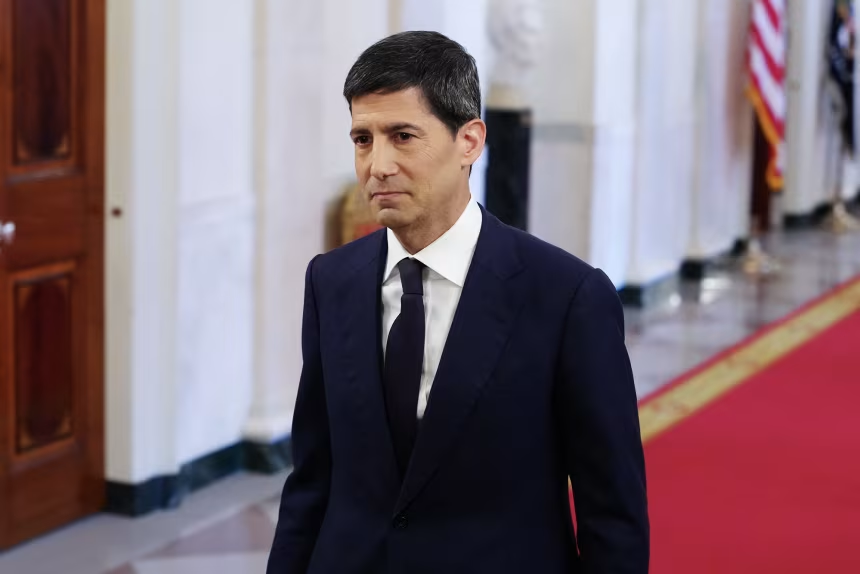
The swaps market has been assigning more than a 50% chance of a quarter-point hike on Sept. 16. These odds edged higher Thursday after the Financial Times reported that Fed Chairman Kevin Warsh is prepared to raise rates if inflation readings are hot in the coming weeks.
Weakness in the labor market could cool concerns that it is fanning inflation. US inflation data for July including the consumer and producer price indexes are due next week, potentially sealing the direction of interest rates.
"If you are the Fed chairman you want a Goldilocks jobs number, and not something too strong or too weak," said Hank Smith, head of investment strategy at Haverford Trust. "Our base case has been for most of this year that we get one rate hike in December and we acknowledge the probabilities have risen that you could see a hike in September."
The upcoming data releases have taken on added importance as Warsh's Fed weans markets off so-called "forward guidance," which refers to publicly signaling interest-rate policy far in advance of official decisions. Markets will instead look to draw signals from the data on the outlook for the Fed's rate decisions.
Economists expect the employment report will show about 80,000 were created in July, with more jobs added than in June but still among the lowest totals this year. Data from the Bureau of Labor Statistics Tuesday aligned with a stable labor market with limited layoffs.
In a sign of growing market uncertainty over the Fed's path, traders have been spending millions in the Treasury options market over the past week for protection against rising yields. Open interest in put options on 10-year note futures surged with strike prices corresponding to yields near 5%, a level briefly exceeded in 2023 for the first time since 2007.
Thursday's flows included a hedge against 30-year yields rising to around 5.3%. It reached 5.28% on July 31, the highest level since 2007.
In short-term rate futures, activity has been more balanced, reflecting uncertainty about the outcome of the September meeting. Wednesday's session featured a large new position in options on the Secured Overnight Financing Rate anticipating no change in rates. The wager stands to gain if the jobs data are soft.
Expectations for more than one Fed rate increase this year eased after policymakers held rates steady in July, even as three dissented in favor of raising them. The market is pricing in one move this year and another by mid-2027.
Interest-rate strategists at Wells Fargo & Co. this week said the market is likely to respond more forcefully to a strong jobs report than to a weak one, with "any signs of wage pressure" able to "rebuild hike expectations" causing two-year Treasury yields to rise.
"After last week's FOMC meeting, markets priced out hikes as they became concerned around the Fed's willingness to hike to fight inflation, but have become more short the long-end given worries of long-run inflation becoming higher," said Molly Brooks, US rates strategist at TD Securities. "A hotter labor print could pour gasoline on the fire, where investors become concerned with both inflation and a labor market that could be reigniting growth."

A gauge of wage growth increased to 3.5% in June from 3.4%, which had been the lowest reading in recent years.
"With confusion around the Fed reaction function, I do think that surprises in the labor market have the potential to move markets more," said Priya Misra, portfolio manager at JPMorgan Asset Management. Misra said a weaker jobs report would cause a bigger reaction, as a strong labor print would be within market expectations.
Dhiraj Narula, an interest-rate strategist at HSBC, said he is looking to next week's inflation print for direction, as Fed members have continued to voice concerns about its persistence.
"We think next week's inflation data is more important, particularly as several policymakers who supported holding rates steady in July have noted that further signs of persistent inflation would motivate action," Narula said.
--With assistance from Edward Bolingbroke.
Most Read from Bloomberg Businessweek
This week top market trends.
-
Big Tech Stocks Storm Back as AI Fears Fade and Euphoria Resumes
2026-08-07 :: stock :: bloomberg -
PayPal raises profit outlook as Q2 earnings top forecasts
2026-07-28 :: companies :: investing.com -
Fed expected to hold rates steady. But an interest rate hike isn't off the table
2026-07-27 :: watchlist :: yahoo finance

Recent global market news
-

Boeing beat Q2 estimates as jet deliveries climb, cash turns positive
2026-07-28 :: :: yahoo finance